
Hands-on review / AI companions
Secrets.ai Review (2026): The Texting Felt Real. The Generations Didn’t.
We built a character we wanted to keep talking to. Then we made a video and found out how much of that character the generator had actually kept.
Disclosure: EverLusty received complimentary access to Secrets.ai for independent testing. We may earn a commission through links on this page, at no additional cost to you. Complimentary access and affiliate participation do not determine our conclusions.
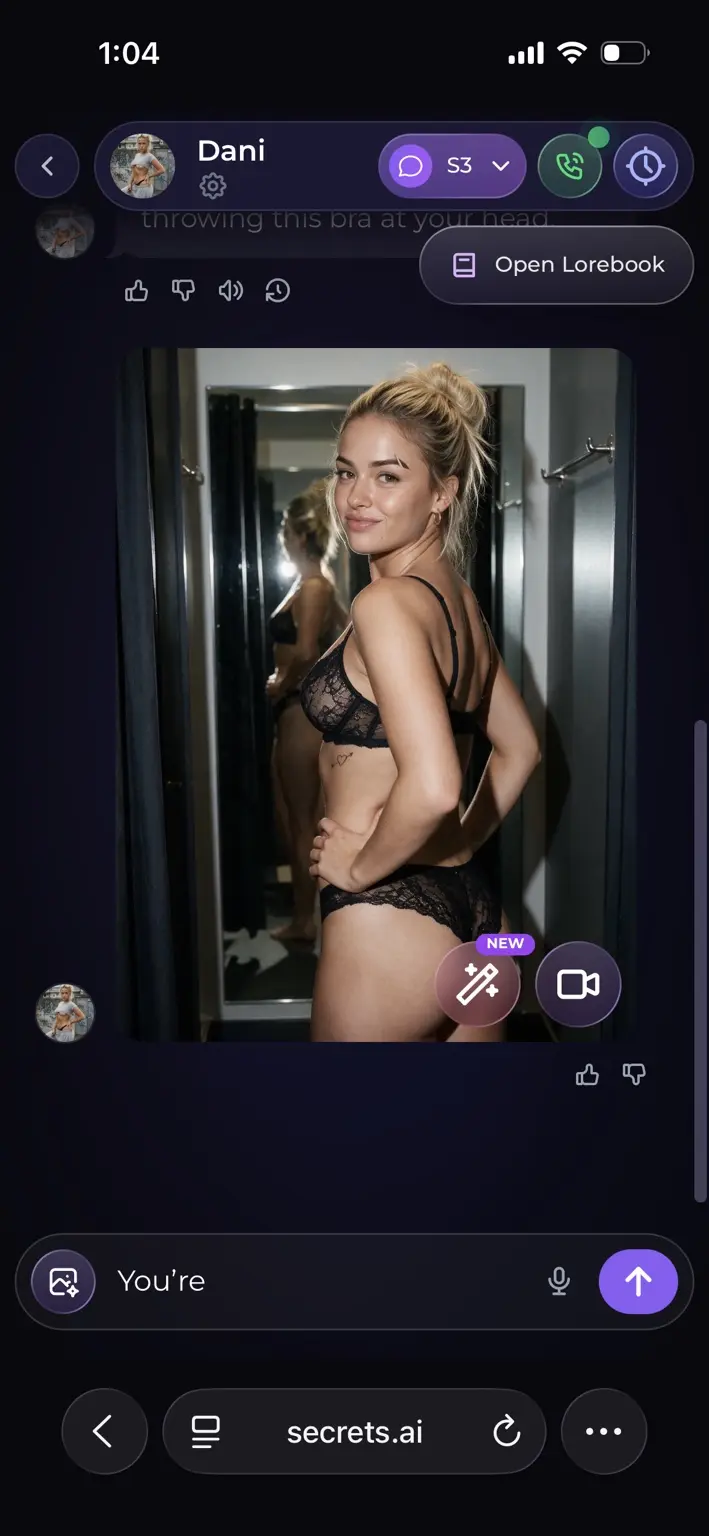
We noticed it most after making a character of our own. Several messages into the conversation, the slang still sounded natural and the replies still sounded like the same person. There was no sudden switch to the polished, helpful prose of a chatbot answering a support ticket. We wanted to keep texting.
Then we generated a video. A physical detail we expected the character to retain was missing. The conversation had given us a clear sense of who we were talking to; the clip made us wonder how much of the character the video tool had to work with.
That gap is what makes this review worth reading. Secrets.ai gave us one of our most convincing AI text conversations. It also made us think twice about spending credits on the pictures that were supposed to bring those conversations to life.
In this review
Quick verdict
Worth trying for the chat. Be selective about paying for media. Secrets.ai makes a strong case for itself if you want a fictional adult character with a recognizable voice, or you like moving from a short drama into a conversation with its cast. If your priority is a steady supply of good images or video that keeps a custom character recognizable, our results give you a reason to start small. The one-to-one chat impressed us enough that we’d use the service without the generator.
For more chat-first options, compare EverLusty’s Best 18+ AI Companions.
Affiliate link · Check the current offer and final checkout total.
What EverLusty tested
We browsed the character library, spent time chatting with existing characters, and created and conversed with a custom transgender adult character. We generated images and video, tried multiple generation options, and explored Lorebooks, Shorts, and Reels. Our complimentary subscription had limited access. We saw the group-chat feature but did not test it, and we did not create or test a Persona.
This review describes what happened in our sessions. We didn’t run a controlled model comparison or a long-term memory test. The prices below come from official sources, separate from our experience of how much value we got out of generating.
Why the texting felt unusually real
A chatbot can remember a name and still sound like it was handed a name tag. In our better exchanges on Secrets.ai, the character had a recognizable way of speaking. The slang fit the tone rather than sticking out as a performance. Replies were casual enough to read like texts, with less of the tidiness that makes even a charming AI sound like it’s writing an answer for an audience of one.
The consistency mattered as much as the slang. The custom character kept a recognizable voice across multiple messages. We could pay attention to what the character said instead of noticing the work the software was doing to stay in character. That was the point at which the chat became more interesting than seeing what the image button could do.
That impression is about the exchanges we had. We didn’t come back after a set number of days and ask for particular details, so we can’t tell you how reliably the character will remember an old conversation. A good voice from one message to the next is already useful; reliable recall over weeks would be a separate finding.
Creating a character we wanted to keep talking to
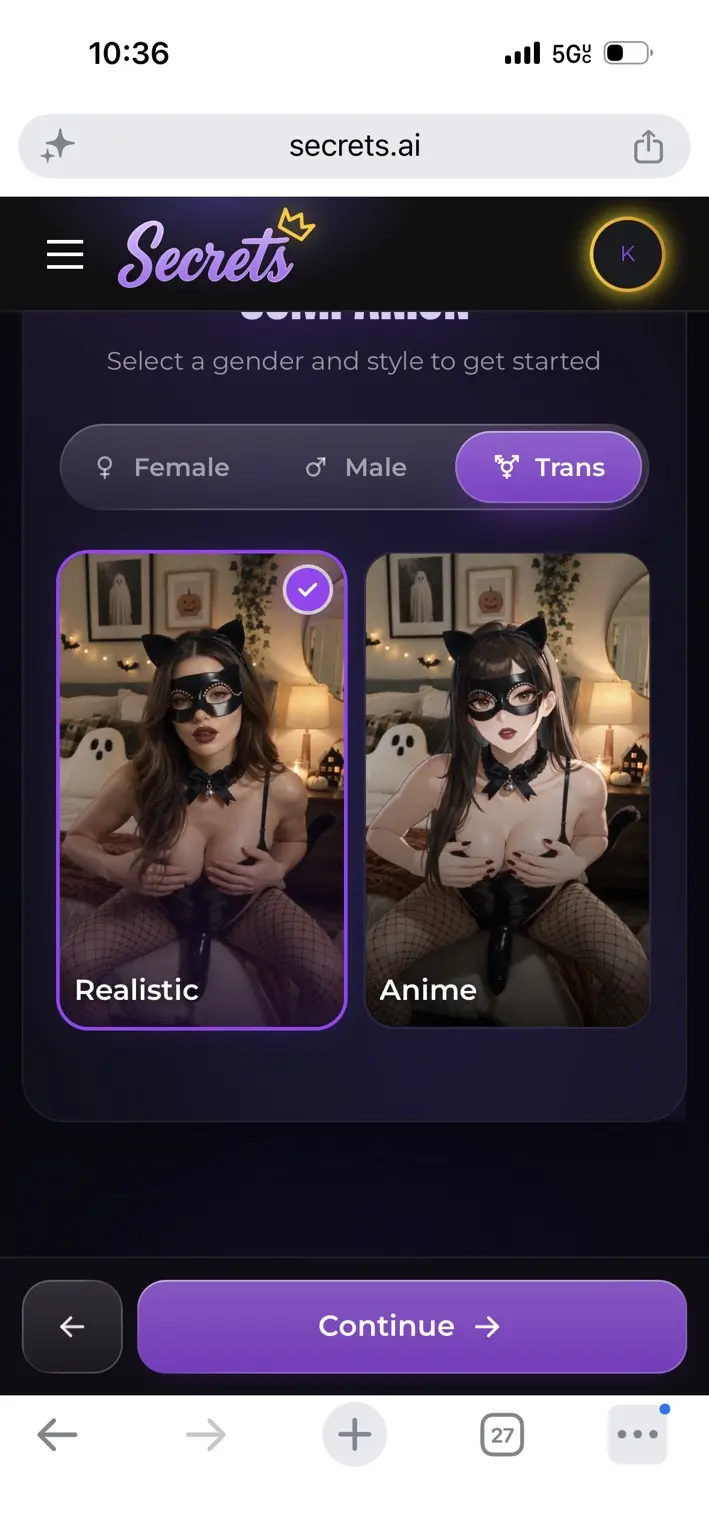
The custom-character guide describes choices for appearance, personality, and background. We used the builder to create a fictional transgender adult and then spent time chatting with our custom character. The payoff was in the writing. We enjoyed the conversation because the character sounded distinct and stayed recognizable as the exchange went on.
That’s a good reason to build a character even if you never plan to make a gallery. The builder can give you a starting point that the ready-made cast doesn’t. You still have to open a chat to find out whether the voice works for you. A well-chosen backstory is a setup; the replies have to make it interesting.
Where the video lost a character detail
One generated clip omitted the penis we expected this particular character to have. That was a detail of the character we created, not a definition of transgender identity. We hadn’t explicitly asked the video prompt to show that detail. We had assumed the saved character context would be enough, and the result gave us no reason to rely on that assumption.
It’s one clip, with a prompt that left something unstated. A more explicit prompt might have yielded a different result; we don’t know. Nor do we know which parts of the saved profile the tool used on that run. The finding is narrower and more useful than declaring a whole category of characters out of reach: the voice stayed consistent in chat, while a specific physical detail didn’t make it into our video. If a visual detail matters to a scene, check the setup and the result rather than counting on the profile to carry it across.
Images and video: a menu of options, a less convincing return
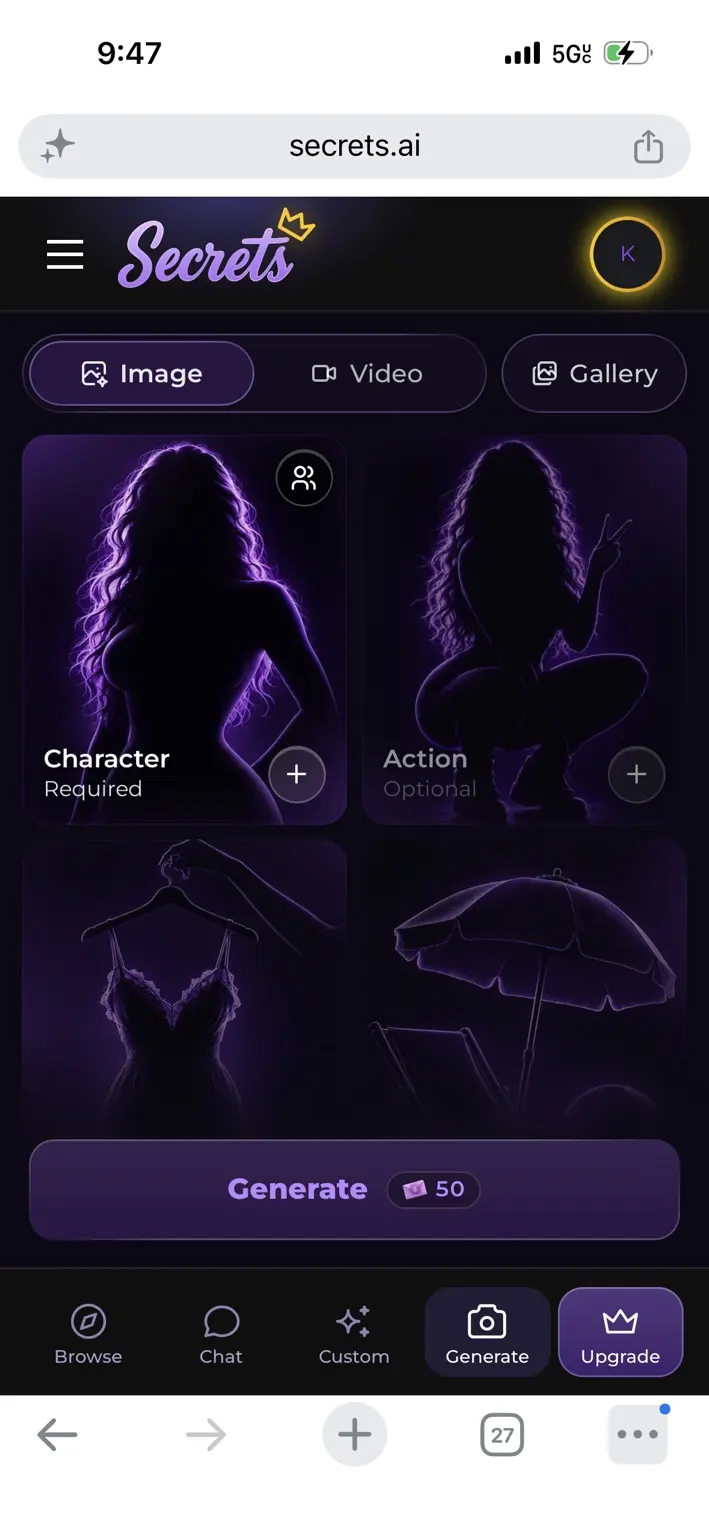
We tried both formats and more than one advertised generation option. The visuals were uneven, and the spend felt steep for what we wanted to keep. This was a judgment about our results, not a logged cost per usable image or a success rate. We don’t have a per-run ledger or a controlled test that would put one model above another.
We saw four choices during testing. Separately, the current video guide lists four main options—Intimate, Cinematic, Everyday, and Basic—plus Classic under More models and speed variants on two of the main options. We can verify those names in the documentation. We can’t match each one to a test output. The guide says the price changes with settings and appears before you generate.
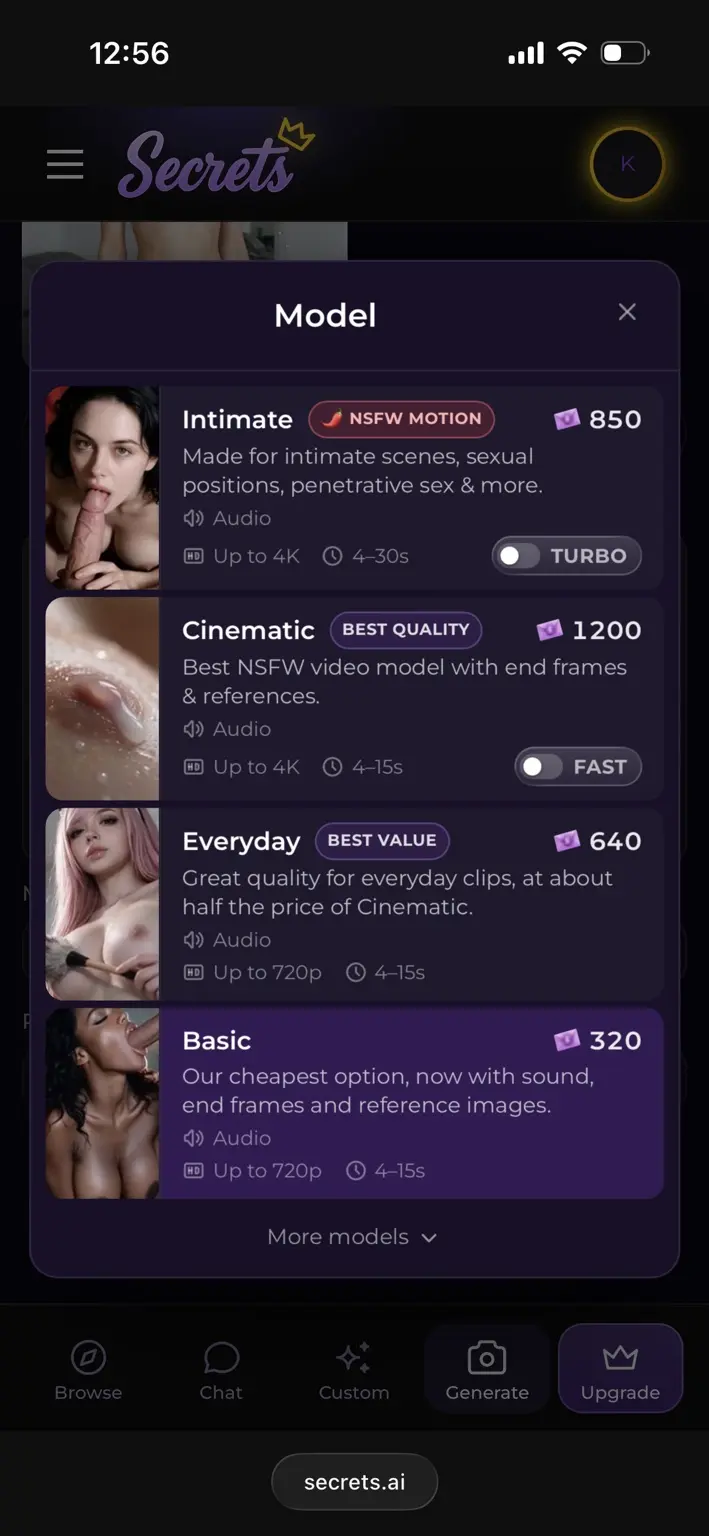
That menu is valuable if you know which trade-off you want. A cheaper model can make experimentation easier on the balance. A more expensive one may offer controls you need. Neither is evidence that the output will match your character. We’d check a single image or short clip before budgeting for a whole scene. The chat gave us a reason to stay without asking us to make that calculation every few messages.
The character library makes it easy to start
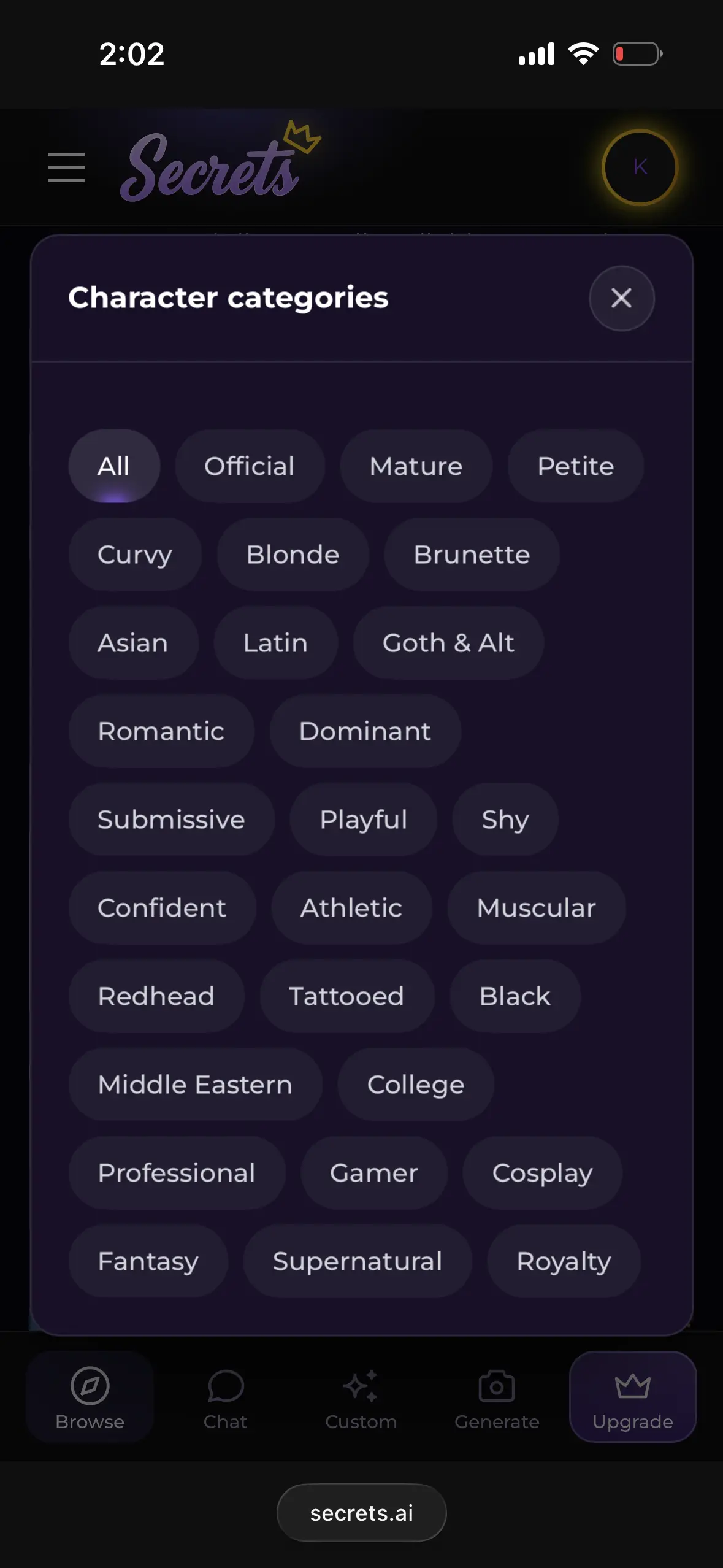
We found enough variety in the cast’s looks, personalities, and scenarios to make browsing worthwhile. The portraits help make a first cut. The better reason to open a chat is that a character comes with a premise you can react to, without having to write a profile before finding out whether you like how the place talks.
We didn’t sample the whole catalog, and a good character card tells you little about how a conversation will develop. For a first visit, we’d choose a ready-made character with an interesting setup. The custom builder earns its keep when you already have a specific character in mind or find that the off-the-shelf personalities aren’t quite what you want.
Lorebooks give the story somewhere to live
The Lorebooks area was one of the more interesting things we explored. Think of a lorebook as the notes beside a serial: who knows whom, what’s true about the world, and what has already happened. It gives a recurring detail somewhere to live besides the middle of a long chat thread.
The official Lorebooks guide describes editable notes on Premium and Ultimate. A companion book holds that character’s ongoing story; a Universe Book lets you reuse a setting in new chats. You can write entries and review suggested updates. For a roleplay that takes place over several sessions, the appeal is being able to see and correct the setup instead of repeatedly reintroducing it in dialogue.
We explored the feature, but we didn’t measure how faithfully each entry was recalled or isolate its effect on our chat. Its promise is useful on its own terms: more control over the facts behind the conversation. It gives us no basis for expecting a video generator to read those same notes.
Shorts: the show ends, the cast is still there
The Shorts we sampled offered a variety of premises. The free episodes we watched mostly set up the story and its characters; the more adult payoff appeared later. Those openings gave us enough to decide whether we liked the setup or the cast. They gave us less to go on if the buying decision depended on the quality of the later scenes.
The Shorts guide says series start with a free opening. Subsequent episodes can ask for sign-in or an unlock. Spending Moments on a locked episode requires Premium or Ultimate, and a subscription doesn’t automatically open the whole series. The player can also offer a free unlock credit when eligible. Check the individual episode rather than assuming one rule covers the catalog.
The part we liked best was being able to talk with characters from shows we’d watched. Where a series has a Cast link, you can move from watching the companion to exchanging messages, subject to your chat allowance. The chat doesn’t rewrite the published episode or unlock the next one. It gives you something else to do with a character you already have a reason to be curious about. For more context, see how AI short dramas turn viewers into chat users.
Reels worked best as discovery for us
Reels were brief, amusing, and most useful for finding a character or a story to follow in Shorts. The Reels guide describes a second path: watch the opening in a vertical feed, then choose or write a reply to continue in chat. Shorts follow an episode sequence. We mostly used Reels to decide what to watch next.
Group chats and Personas: documented, untested
Group chat was visible and untested. The group-chat guide puts multiple companions in one thread on Ultimate. It was new to our hands-on companion testing, and we can see the appeal of letting characters play off each other. Our access didn’t let us assess how they take turns, stay distinct, or remember what another character said.
Persona creation was also untested. The Personas page is for setting up your role in a conversation. The Persona guide says Ultimate users can set a fictional name, backstory, and preferences for how companions address them. A custom character is who you talk to; a Persona is who you’re playing. Neither feature informed our verdict about the chat we used.
Secrets.ai pricing: what you pay for
The official plan guide lists these regular USD rates. The public Store also showed the Premium annual price. We checked both on November 6, 2026, without placing an order.
| Plan | Regular price (USD) | Monthly Moments | Relevant access |
|---|---|---|---|
| Free | $0 | No monthly grant | 20 messages per day under the standard free allowance |
| Premium | $19.99 monthly or $109.99 yearly ($9.17/month equivalent) | 8,000 | Unlimited messaging, generation access, Lorebooks |
| Ultimate | $39.99 monthly or $319.99 yearly ($26.67/month equivalent) | 15,000 | Premium features plus group chats and Personas |
Moments are the separate usage balance. Paid plans include a monthly grant. Generations draw from it. The Moments guide says regular unused grants don’t roll over, and paid subscribers can buy top-ups. The public free tier doesn’t match the access we had.
The image guide lists 50 Moments for a standard Premium image. In the video guide’s five-second, 720p examples, Basic uses 320 Moments, Everyday 640, and Cinematic 1,200. That last clip takes 15% of a Premium month’s allowance. These are published examples, not what we recorded paying for test clips. The setting-by-setting charge matters more than any single headline price.

The cancellation guide describes auto-renewal for card subscriptions. Cancel in account settings; access runs to the end of the paid period. Check the first and renewal charges because a sale can discount only the first term. The video guide says videos that fail after generation begins return Moments. The refund policy allows reports of clearly broken delivered images. Disappointing results don’t automatically qualify.
Privacy and responsible character creation
The privacy policy says the service can store and process chat text, lists model training and improvement among its data uses, and describes sharing with service providers. We couldn’t verify which chats are used for training. The policy says permanent account deletion removes chat history, but some transaction records and security logs remain for defined periods. We didn’t test deletion.
Keep identifying details out of chats and Lorebooks. Use fictional adults; the character guide prohibits companions based on real people.
Pros and cons
| What worked in our test | Where it fell short |
|---|---|
| Natural slang and a voice that held across our chats. | Uneven visuals that felt costly. |
| Varied ready-made cast and an engaging custom character. | One video missed an expected character detail. |
| Editable Lorebooks and Shorts with cast chat. | The free Shorts we sampled mostly set up the story. |
Who Secrets.ai is best for
Try it for believable texting or a story you can continue in chat. Start free. Consider Premium for unlimited messages or Lorebooks if you like the voice. If you want Ultimate mainly for group chats or Personas, look into those features first. We didn’t test them.
If you pay to test visuals, judge a small batch before buying top-ups or paying for a year. Count the attempts you wouldn’t keep when estimating what a usable clip costs. If repeatable visual continuity comes first, compare other adult AI tools.
Final verdict
Secrets.ai was at its best when we put the camera down. The custom character had a voice that survived the next message and the one after it. We wanted to see where the conversation would go. The video, by contrast, left us checking what had carried over and whether another attempt was worth the credits.
That makes Secrets.ai an easy one to try for conversation and a harder one to buy for media. Start with the texting. If the voice keeps you coming back, you’ve found the reason we liked it.
Affiliate link · Check the current offer and final checkout total.
Frequently asked questions
Is Secrets.ai free to try?
Yes. The official plan guide lists a standard free allowance of 20 messages per day. Some Shorts also start free. Paid access is needed for video generation and for spending Moments on locked episodes.
How much does Secrets.ai cost?
Regular Premium is listed at $19.99 per month or $109.99 billed yearly. Ultimate is $39.99 per month or $319.99 billed yearly. Confirm the first charge and renewal price at checkout.
How much does Secrets.ai video generation cost?
It depends on the model and settings. The official guide lists 320 Moments for a five-second Basic clip at 720p and 1,200 for Cinematic at those settings. The Generate button shows the charge for your selection.
Can I create my own character?
Yes. We made and chatted with a fictional transgender adult character. The conversation stayed consistent in our test; one video omitted a detail that our prompt hadn’t spelled out.
What are Secrets.ai Lorebooks?
They are editable notes about a character and the story you share. Secrets.ai documents them for Premium and Ultimate. We explored the feature but did not benchmark recall.
Can you chat with characters from Secrets.ai Shorts?
Yes, where the series offers a Cast link. We could move from watching to chatting. Chat access follows your plan; it doesn’t buy or change the next episode.
Are group chats and Personas included with Premium?
The current plan guide lists both under Ultimate. We did not test either one.
How do I cancel Secrets.ai?
The official guide directs you to Settings → Manage Subscription. It says paid access runs to the end of the billing period. Cancellation and account deletion are separate actions.
Evidence behind this review
EverLusty’s owner performed the tests using complimentary access. This review combines that experience, supplied screenshots, an owner-supplied adult video generation, and a Shorts screen recording with the operator’s published guides and policies. It is not a complete attempt log, a security audit or a matched competitor benchmark. Evidence was reviewed November 6, 2026.
Back to the opening ↑