
Adult culture · Global research · Adults only
How the World Gets Turned On: Porn, Erotica and Desire Across Cultures
From Japanese shunga and Indian temple sculpture to tube-site algorithms and AI fantasy, this global investigation asks who gets to define sexual imagery—and why the answer keeps changing.
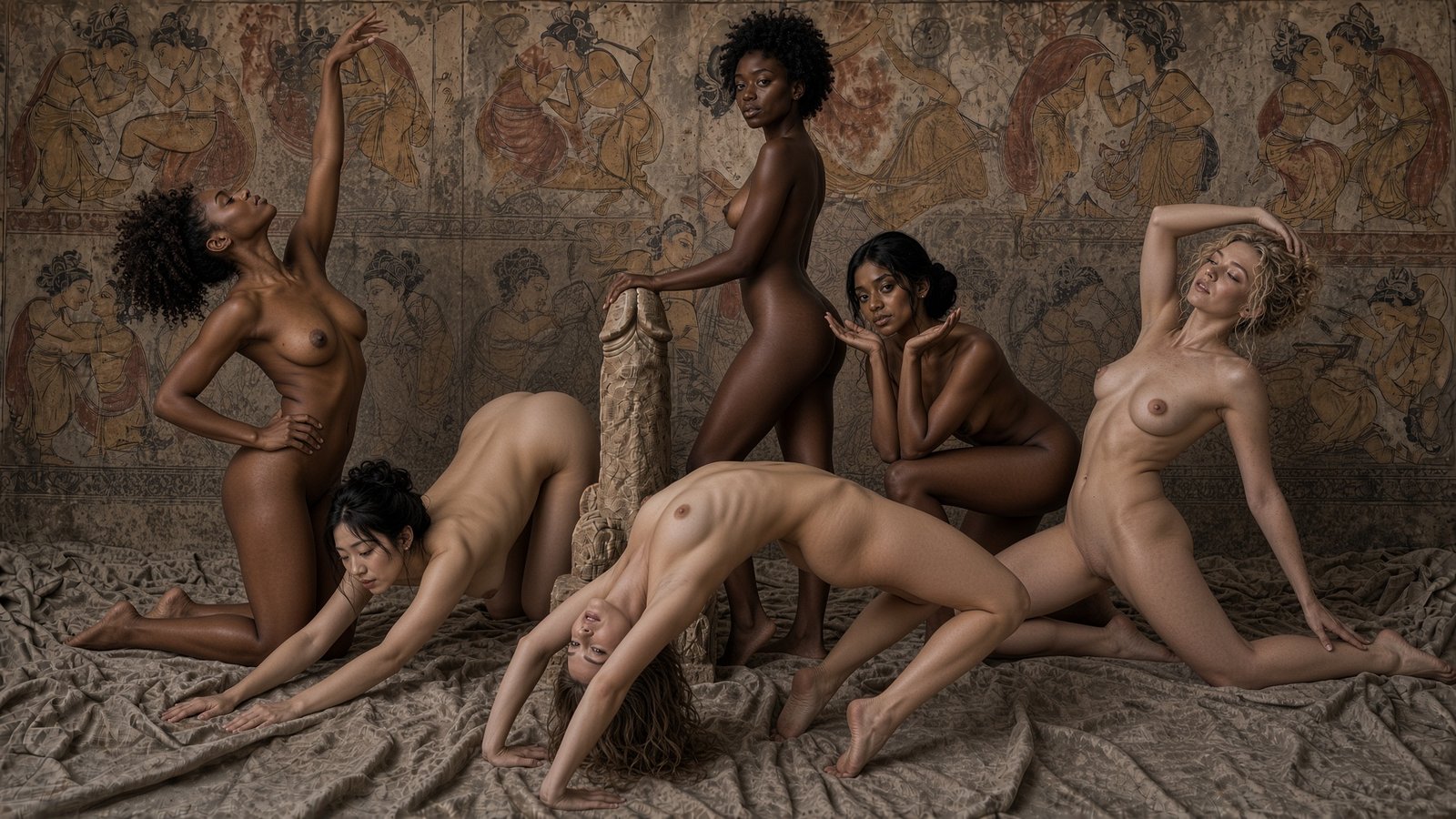
What one society hangs in a museum, another hides behind an age gate, and a third once carved into a temple wall. The body stays recognizably human. The meaning does not.
18+ notice: This feature discusses historical sexual imagery, pornography, censorship and adult media. It is intended for adults. It does not endorse non-consensual content, age-ambiguous sexual imagery, unauthorized real-person replicas or illegal material.
Research note: Historical interpretation is attributed where disputed. Current legal and regulatory information was checked on October 8, 2026 and is a cultural snapshot, not legal advice.
AI-media disclosure: The featured image, five supporting images, and two short videos are AI-generated EverLusty editorial illustrations featuring fictional adults. They are not documentary or ethnographic evidence. Eight archival images are separately credited to their source institutions or creators.
Quick answer
There is no universal line separating art, erotica and pornography. A sexual image acquires meaning from its setting, audience, purpose, method of circulation and the authorities empowered to judge it. A print sold in an Edo-period bookshop, a couple carved onto an Indian temple, a French novel locked in a library’s restricted collection and a video recommended by an American platform can all contain sexual material while belonging to radically different social systems.
The most important pattern is not that some cultures are “open” and others are “repressed.” It is that every society draws boundaries—and those boundaries move.
-
The strongest historical lesson: explicit does not automatically mean pornographic. Ancient and premodern objects may have ritual, auspicious, medical, literary, domestic or funerary functions that modern categories cannot neatly contain.
-
The strongest modern lesson: law is only one editor. Publishers, cinemas, payment companies, app stores, search engines and recommendation systems decide what becomes visible and profitable.
-
The internet’s great contradiction: it made adult media more globally accessible while concentrating distribution into a narrow set of platform formats, labels and visual habits.
-
AI’s promise: fantasy can become more local in language, setting, voice and storytelling.
-
AI’s danger: the same machinery can industrialize racial fetishization, colorism, cultural costume clichés and non-consensual synthetic imagery.
Affiliate disclosure: EverLusty may earn a commission from qualifying partner links at no additional cost to you. This cultural feature contains no commercial service recommendation, so no affiliate link is included. Editorial conclusions remain independent.
The same image, three different rooms
Put an erotic image in a museum and visitors lower their voices. Put it on a temple exterior and the questions change: Is it auspicious? Philosophical? Decorative? Connected to fertility, pleasure, cosmic order or the life of the householder? Put the same image on a subscription site and the context announces commerce, adult access and deliberate arousal.
The pixels have not moved. Everything around them has.
That is the problem with treating “pornography around the world” as a simple map of permissive and restrictive countries. Pornography is not merely a visual property, like the color red. It is a category created by people: lawmakers, viewers, curators, religious authorities, customs officers, filmmakers, merchants and, increasingly, software.
Even a modern interdisciplinary panel struggled toward a working definition rather than discovering a natural law. Its global Delphi study of pornography emphasized explicit sexual material intended primarily to produce arousal, while acknowledging that purpose, content and context remain contested. Obscenity is slipperier still. In the United States it is a constitutional category governed by the three-part Miller test and “community standards”; in other jurisdictions it may be defined through public morality, youth protection, media classification or religious norms. The same work can migrate between those categories as governments and audiences change.
This feature therefore does not ask which nation is most sexual. That question is junk anthropology wearing cologne. It asks who gets to define sexual representation, how that definition travels, and what happens when a global platform drops the same menu into Tokyo, Lagos, Mumbai, São Paulo and Berlin.
Erotica, pornography, nudity and obscenity are not synonyms
| Term | Practical meaning in this article | What it does not prove |
|---|---|---|
| Nudity | A body without clothing. Its meaning may be domestic, athletic, medical, ritual, political, artistic or sexual. | That the scene is intended to arouse. |
| Erotica | Sensual or sexually suggestive material, often framed through art, literature, atmosphere or narrative. | That it is legally permitted, artistically superior or non-commercial. |
| Pornography | A modern, historically changing category generally organized around explicit sexual display or stimulation. | That every viewer responds alike or every explicit historical object served the same purpose. |
| Obscenity | A legal or moral judgment made under a particular jurisdiction and era. | A stable global definition. |
| Sexual art | Art that represents bodies, desire or sexual acts within an aesthetic, ritual, political or narrative project. | Immunity from censorship—or a secret pornographic purpose. |
| Ritual or fertility imagery | Objects connected by evidence to worship, protection, reproduction, initiation, social identity or ceremony. | That the object was made for private sexual stimulation. |
These categories overlap. They also fight.
A sensual novel can be literature and contraband. A commercial adult film can be a labor document, a fantasy product and a censorship target at once. A nude photograph can be naturist propaganda rather than pornography. Calling an ancient object “porn” may impose a modern industry, audience and intention on a society that had none of those things in the same form.
Japan: explicit imagination under visual censorship

Edo-period Japan did not wait for the internet to discover illustrated desire. Shunga—literally “spring pictures”—appeared in paintings, woodblock prints and printed books, circulated across social strata, and could be comic, instructional, celebratory or fantastical. The British Museum describes shunga as explicitly erotic material produced in large quantities, especially during the Edo period; the Metropolitan Museum holds works such as Hishikawa Moronobu’s Two Lovers and an illustrated erotic book attributed to Utagawa Toyokuni I.
Calling shunga “old Japanese porn” is tempting and incomplete. It was commercial and often designed to arouse, but it also parodied literature, displayed textile fashion, played with social types and appeared in a print economy unlike a modern video platform. Its exaggerated anatomy was convention, joke and visual strategy—not a failed attempt at documentary realism.
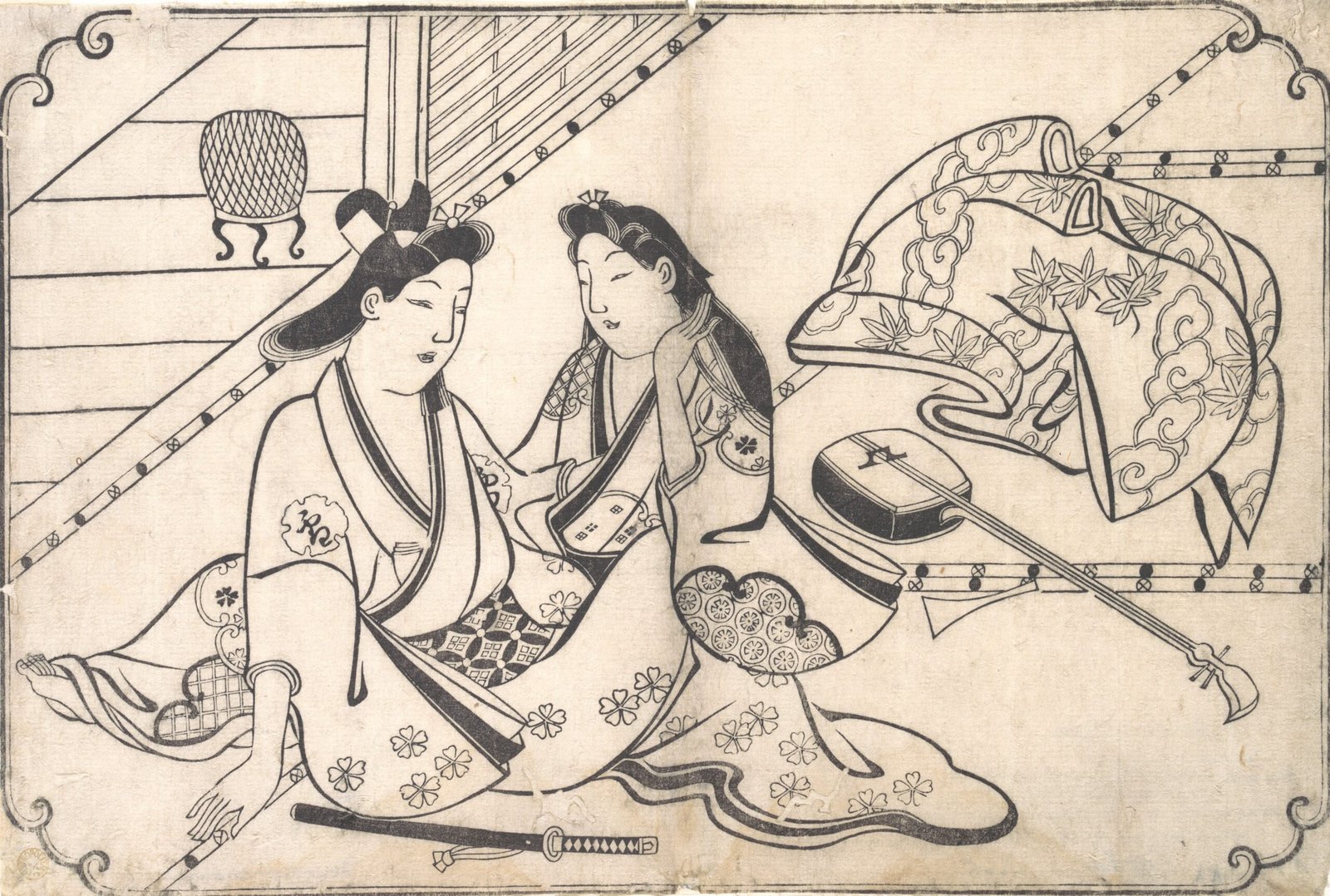
Credit: The Metropolitan Museum of Art, The Francis Lathrop Collection, Purchase, Frederick C. Hewitt Fund, 1911 (JP676). Source · Public domain · Image reproduced without visual alteration.
Modern Japan developed one of the world’s most sophisticated adult-media ecosystems: magazines, theatrical film, adult video, manga, animation, fan-made doujin work and character-centered fantasy. Yet formal restriction remained. Article 175 of Japan’s Penal Code continues to prohibit distribution or public display of “obscene” materials; current legal and industry practice is one reason commercial adult video commonly obscures genitals. The operative law was checked through Japan’s e-Gov legal database, while recent scholarship emphasizes that mosaics are also produced through industry self-regulation and negotiated enforcement—not by a single censor leaning over every editing console.
That contradiction—abundant explicit fantasy, regulated depiction—helps explain why Japanese adult culture developed such a large vocabulary of suggestion, fictionalization and stylization. Manga and animation can exceed the physical limits of live production. Character culture can make continuity and narrative as important as performers. It also creates serious modern disputes around youth-coded design, consent and where fiction meets harm.
The useful conclusion is not “Japan is permissive.” Japan is both inventive and regulated, commercial and censored, globally influential and locally specific. The mosaic is not the whole story. Neither is hentai.
India: sacred eroticism and modern restriction
At Khajuraho, bodies wrap around stone architecture with a confidence that has launched a thousand bad travel captions. The temples were built in the 10th and 11th centuries under the Chandella dynasty; their sculptural programs include deities, musicians, everyday life, auspicious couples and a comparatively small proportion of explicitly erotic scenes. UNESCO’s World Heritage account situates them within an integrated architectural and sculptural achievement, not a freestanding archive of ancient pornography.
What the erotic carvings meant remains debated. Scholars have connected them to auspiciousness, tantric traditions, fertility, worldly life and the relationship between desire and spiritual order. No single interpretation owns every wall. The Metropolitan Museum’s 13th-century Loving Couple (Mithuna) offers a useful parallel: the embracing couple was part of temple architecture, where loving pairs could function as auspicious imagery. The embrace is erotic. That does not make the building an adult theater in sandstone.
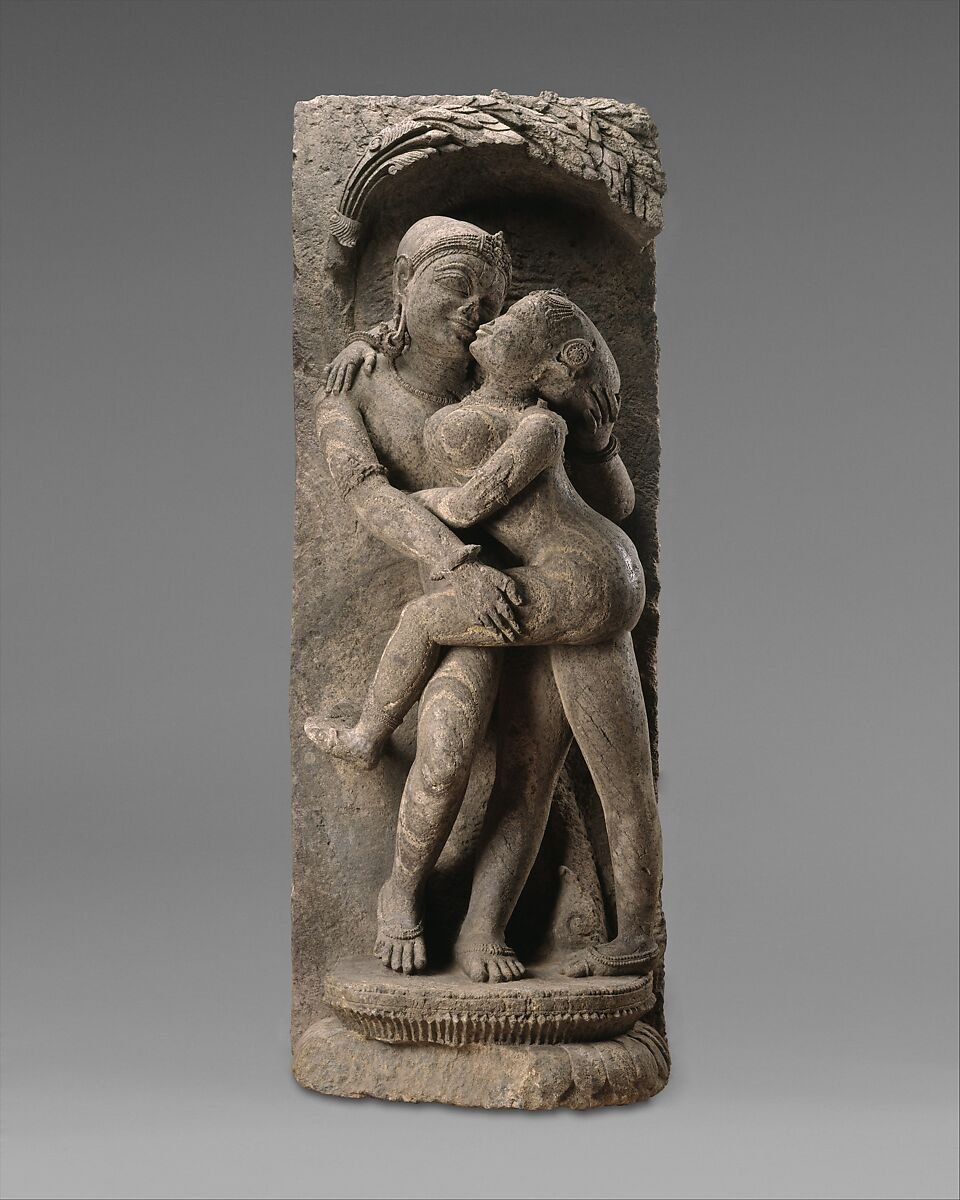
Credit: The Metropolitan Museum of Art, Purchase, Florance Waterbury Bequest, 1970 (1970.44). Source · Public domain · Image reproduced without visual alteration.
India’s literary traditions also include the Kamasutra, a work about pleasure, social conduct, courtship and urban life that Western marketing routinely shrinks into a gymnastics manual. Premodern erotic knowledge coexisted with diverse Hindu, Buddhist, Jain and courtly traditions. Then colonial government helped redraw the legal frame. Section 292 of the Indian Penal Code became a durable mechanism for policing allegedly obscene books and images, and academic histories trace how Victorian moral regulation was adapted, contested and preserved after empire.
Modern India therefore carries several histories at once: celebrated erotic monuments, family and religious conservatism, a massive film and digital-media culture, private adult consumption and a state willing to regulate online sexual material. The government’s February 2026 policy summary says the Information Technology Act penalizes publishing or transmitting obscene or sexually explicit material and places due-diligence duties on intermediaries under the 2021 IT Rules. It also notes takedown obligations for non-consensual intimate imagery (Press Information Bureau, February 11, 2026).
The lazy story says India was sexually liberated and then became prudish. The better story is conflict among religious meaning, class, gender, colonial law, nationalism, cinema, family respectability and digital technology. History did not travel in a straight line from temple ecstasy to browser block.
China: bedchamber arts, erotic fiction and state control
Premodern Chinese sources treated sexuality through medicine, cosmology, household order, pleasure, reproduction and literary imagination. “Bedchamber arts” joined ideas about qi, health and bodily practice; erotic fiction and painting developed their own genres. The Cambridge World History of Sexualities warns against recycling the old binary that ancient China was either liberated or repressed. Surviving texts tell us how authors prescribed and imagined sex, not exactly how everybody lived.
The Ming novel Jin Ping Mei—The Plum in the Golden Vase—mixed domestic intrigue, status, appetite and explicit sexuality. A Qing-period album at the Met, Two Scenes from the Plum in the Golden Vase, shows how a work could be canonical, morally suspect and visually alluring at once. The very category of modern “pornography” arrived through a later collision of print capitalism, global sexology, nationalism and reform; Reinventing Licentiousness follows that change from late Qing to Republican China.
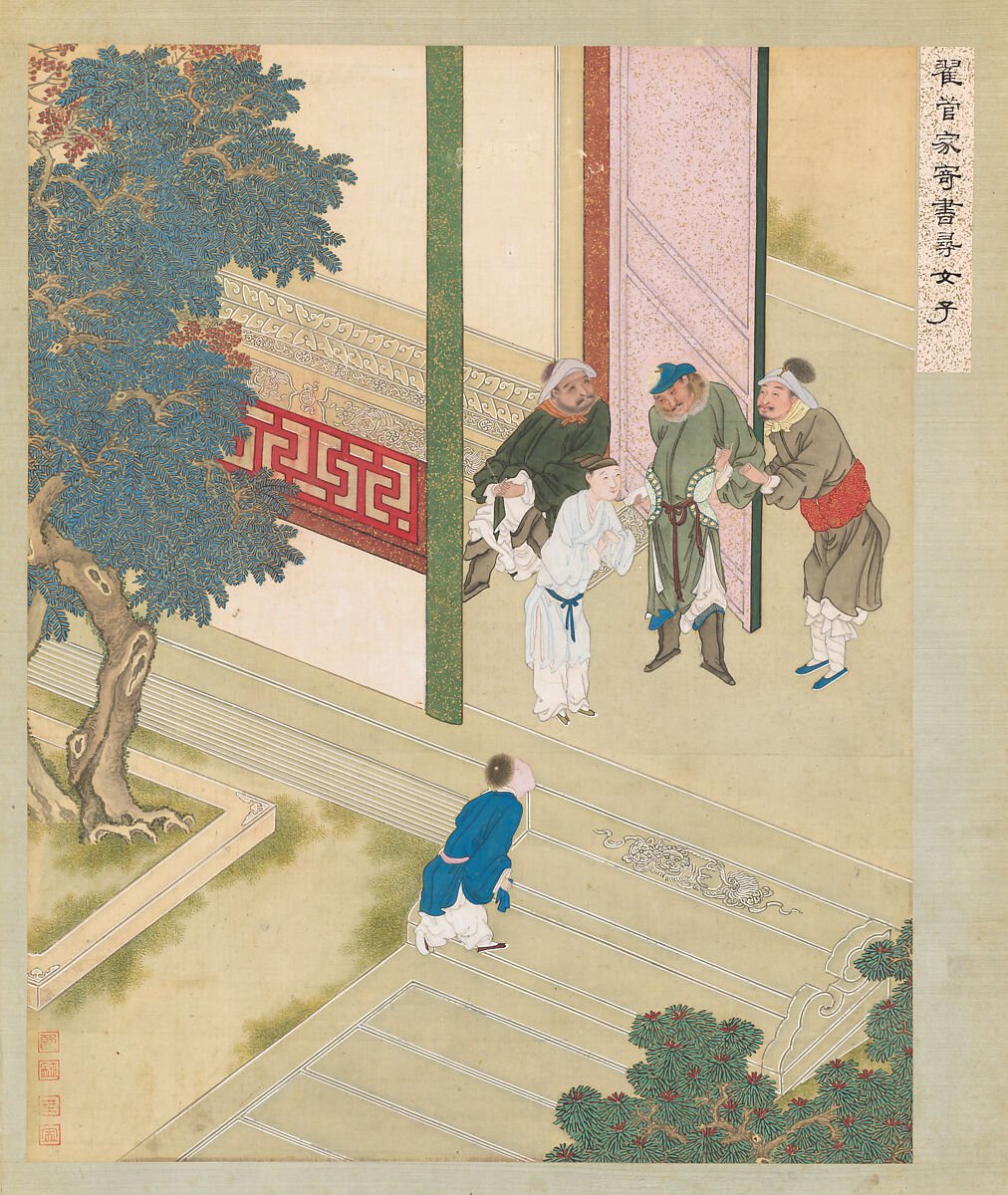
Credit: The Metropolitan Museum of Art, Funds from various donors, 2024 (2024.287a,b). Source · Public domain · Image reproduced without visual alteration.
The contemporary People’s Republic operates under a far more restrictive legal framework. The Criminal Law defines pornographic materials and penalizes commercial production, sale and distribution as well as serious dissemination; internet-specific judicial interpretations extend enforcement to electronic files and online groups. The relevant current text appears in the official Chinese Criminal Law.
But censorship is not the whole of Chinese sexual culture. Romance fiction, queer expression, fan communities, livestreaming, social media and private digital circulation continue to create unofficial channels and coded languages. A state can restrict pornography without deleting desire. It changes the routes desire must take.
South Korea: hyperconnection under tight rules
South Korea’s story is not Japan with faster broadband. It combines a powerful digital-content economy, global popular culture and a restrictive approach to obscenity and sexually explicit distribution. Adult websites have been subject to blocking; youth-media law requires regulators to consider sexual and obscene content while also weighing literary, artistic, educational, medical and scientific context. The current criteria appear in the official Youth Protection Act.
At the same time, webtoons and web novels turned phones into serialized intimacy machines. Romance, fantasy and adult-rated storytelling can be regulated through age ratings, platform policy and industry self-regulation rather than treated like a conventional porn studio. Korea’s Advisory Council on Webtoon Content describes a complaint-and-review system linking the communications regulator, platforms and creators. That is a different cultural form: desire carried by cliffhangers, character arcs and vertical scrolling.
The country is also central to the global reckoning over digital sexual abuse. Spy-camera crimes, coercive distribution and encrypted networks created a political context in which synthetic sexual media is not an abstract novelty. Legislation adopted in 2024 criminalized possession or viewing of qualifying sexually explicit deepfakes and increased penalties for their creation and distribution; the governing provisions appear in South Korea’s official Special Act on Sexual Violence.
The tension is not “technology versus tradition.” It is a society using networked media for extraordinary cultural production while confronting how the same networks can industrialize humiliation and abuse.
France: the velvet rope between literature and porn
France did not abolish censorship by calling erotic work art. It institutionalized the argument.
The Bibliothèque nationale de France kept a restricted collection known as L’Enfer—the Hell—for works judged licentious or scandalous. Its shelves turned prohibition into an archive. The BnF notes that editions of Sade’s Justine and Juliette, now openly consultable, were condemned and seized for nearly two centuries (BnF history). Publishers such as Jean-Jacques Pauvert later made opposition to literary censorship part of the culture of publication.
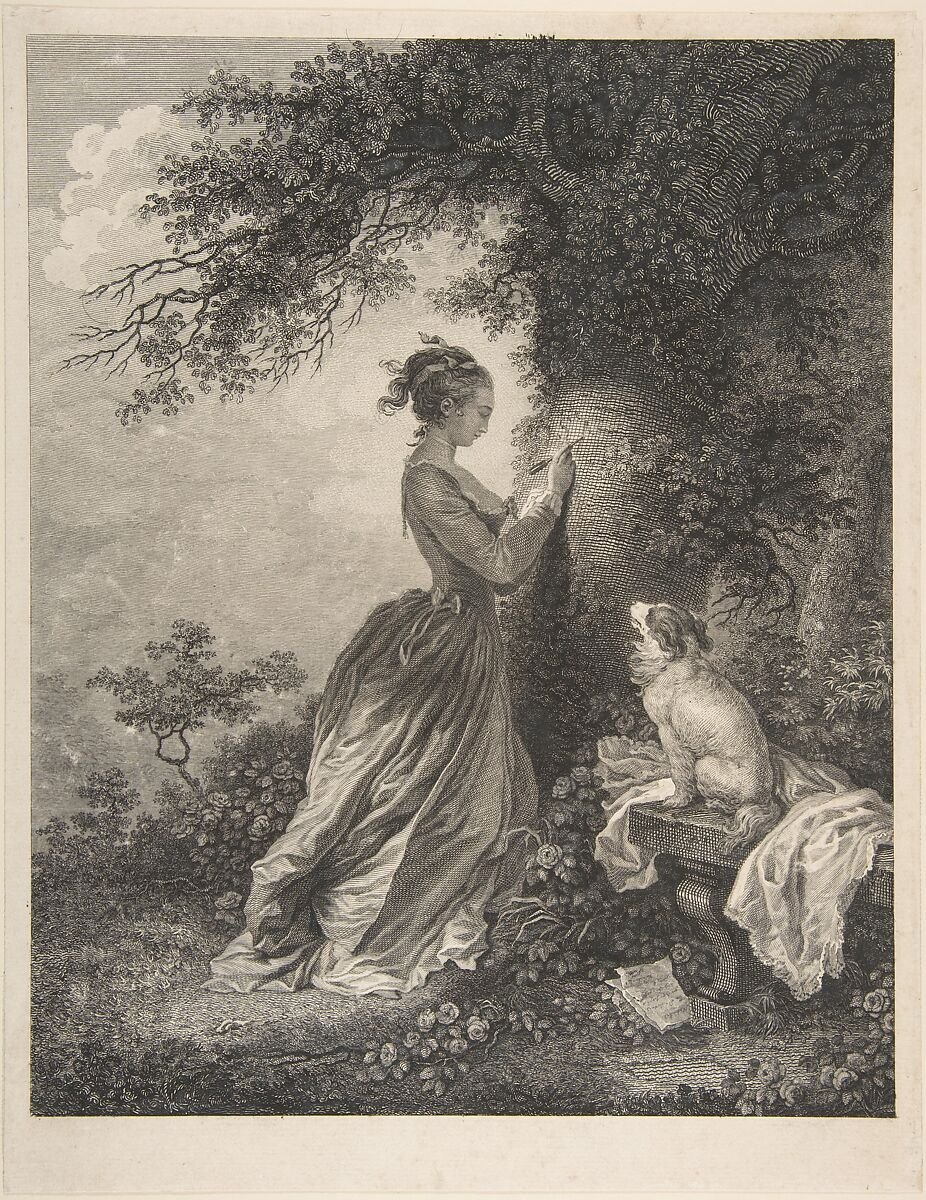
Credit: The Metropolitan Museum of Art, Harris Brisbane Dick Fund, 1935 (35.100.20). Source · Public domain · Image reproduced without visual alteration.
Cinema drew another line. Sexual representation moved toward the mainstream after the late 1960s, while the state created a special “X” classification and tax regime in 1975 for pornographic films and films deemed to incite violence. The French Ministry of Culture and CNC timeline preserve that regulatory history.
Today the boundary runs through museums, literary prestige, cinema classification, commercial adult production and digital age controls. Arcom can order blocking when pornography remains accessible to minors under French law. None of this proves that “the French are more comfortable with sex.” It proves that French institutions have spent centuries classifying sexual representation—sometimes as patrimony, sometimes as cinema, sometimes as contraband.
United States: desire becomes infrastructure
The United States did not invent commercial pornography. It helped turn it into a high-volume media industry and then exported the plumbing.
Print mail-order markets, pinups and magazines created national distribution. Adult theaters and “porno chic” in the 1970s briefly made some explicit films part of mainstream conversation. Home video then moved the audience out of the theater and into private rooms. Peter Alilunas’s history Smutty Little Movies treats VHS not as a footnote but as an industrial revolution: cheap duplication, rental stores, direct-to-video production and a much larger at-home market. Cable, DVDs, webcams, tube sites and creator subscriptions repeatedly changed who controlled production, who got paid and what counted as “amateur.”
Law produced a parallel industry of arguments. Under Miller v. California, material may be obscene only if it satisfies all three parts of a test involving contemporary community standards, patently offensive depictions defined by law, and lack of serious literary, artistic, political or scientific value. The standard is national doctrine with local texture (Legal Information Institute). Protected adult sexual expression and unprotected obscenity are therefore not interchangeable.
The platform era moved power again. A small number of hosting, search, advertising, analytics and payment companies gained the ability to determine visibility at enormous scale. “Free porn” often meant advertising, tracking, uncompensated uploads, piracy or a funnel toward premium services—not the disappearance of cost. Creator platforms returned some control and direct subscription revenue to performers, while also making them responsible for constant marketing, moderation risk and customer intimacy.
Age verification is now the live constitutional battle. In June 2025, the U.S. Supreme Court upheld Texas’s requirement that covered adult sites use reasonable age verification in Free Speech Coalition v. Paxton. The majority accepted the law under intermediate scrutiny; dissenters emphasized burdens on adults and privacy. The official opinion settled that case, not every future state law or implementation question.
American influence is consequently larger than “Hollywood porn.” It includes free-speech doctrine, venture capital, cloud hosting, content moderation, ad technology, payment pressure, creator platforms and the expectation that every desire should be searchable. The camera style went global. So did the drop-down menu.
United Kingdom: obscenity, classification and the national raised eyebrow
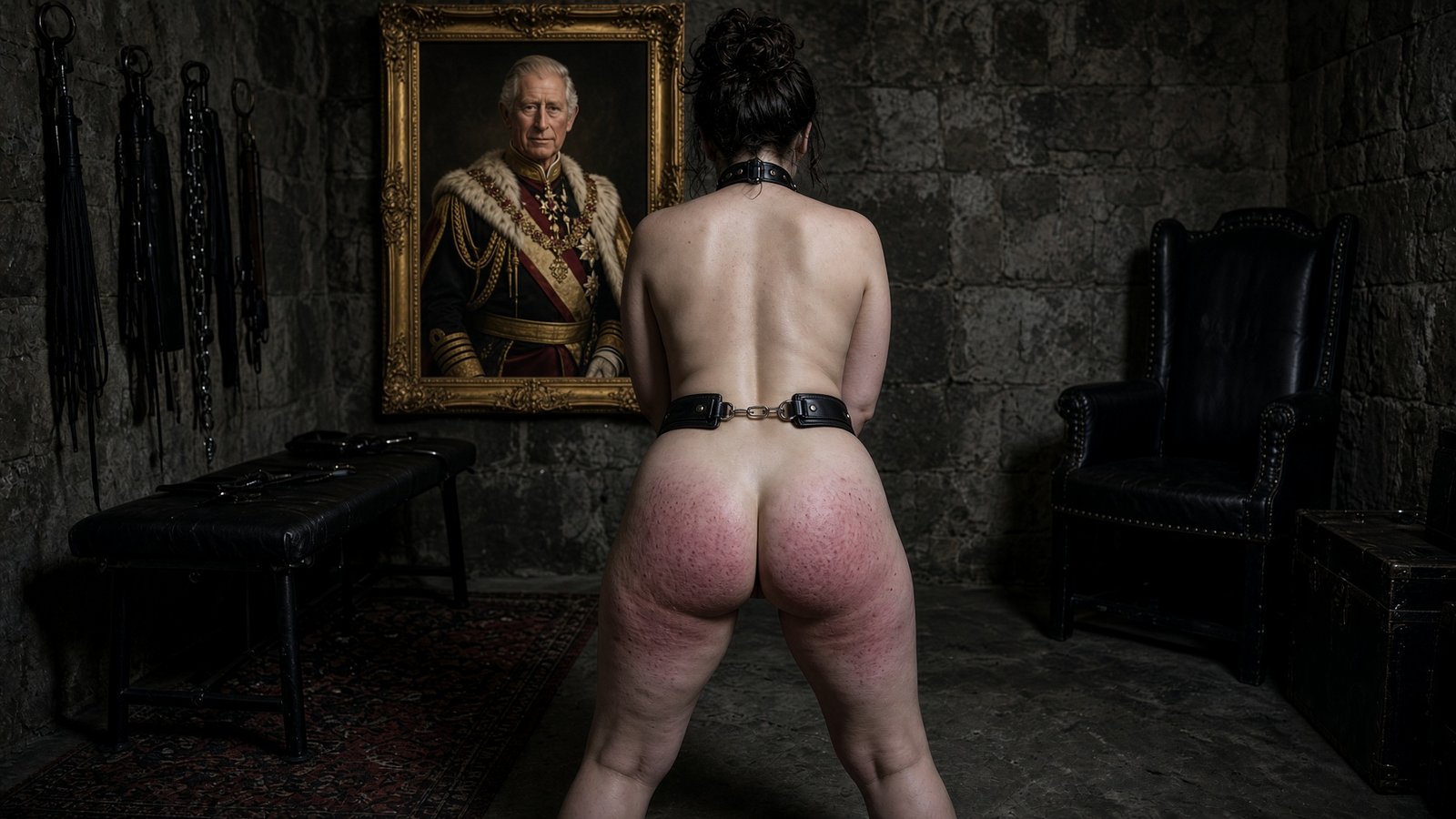
British sexual culture has long performed a peculiar double act: public anxiety, commercial ingenuity. The Obscene Publications Acts built legal tests around material said to “deprave and corrupt,” while providing defenses for public good. Film and video classification created another channel. The British Board of Film Classification confines explicit works of consenting sex and strong fetish material to its R18 category, with tightly controlled distribution.
The tabloid press added its own contradiction: moral outrage could share a page with sexualized imagery. The result was not hypocrisy as a national character trait. It was a business model in which scandal and desire sold each other.
Online regulation now places the United Kingdom among the most consequential age-assurance experiments. Ofcom says services that allow pornography must use “highly effective” age assurance to prevent children from accessing it; the regulator’s rules and enforcement pages were updated through September 2026 (Ofcom online pornography hub). The policy debate concerns child protection, adult privacy, data security and whether large and small sites can comply equally. “Porn is legal” and “porn is unregulated” were never the same sentence.
Germany: a naked body is not automatically a sexual body
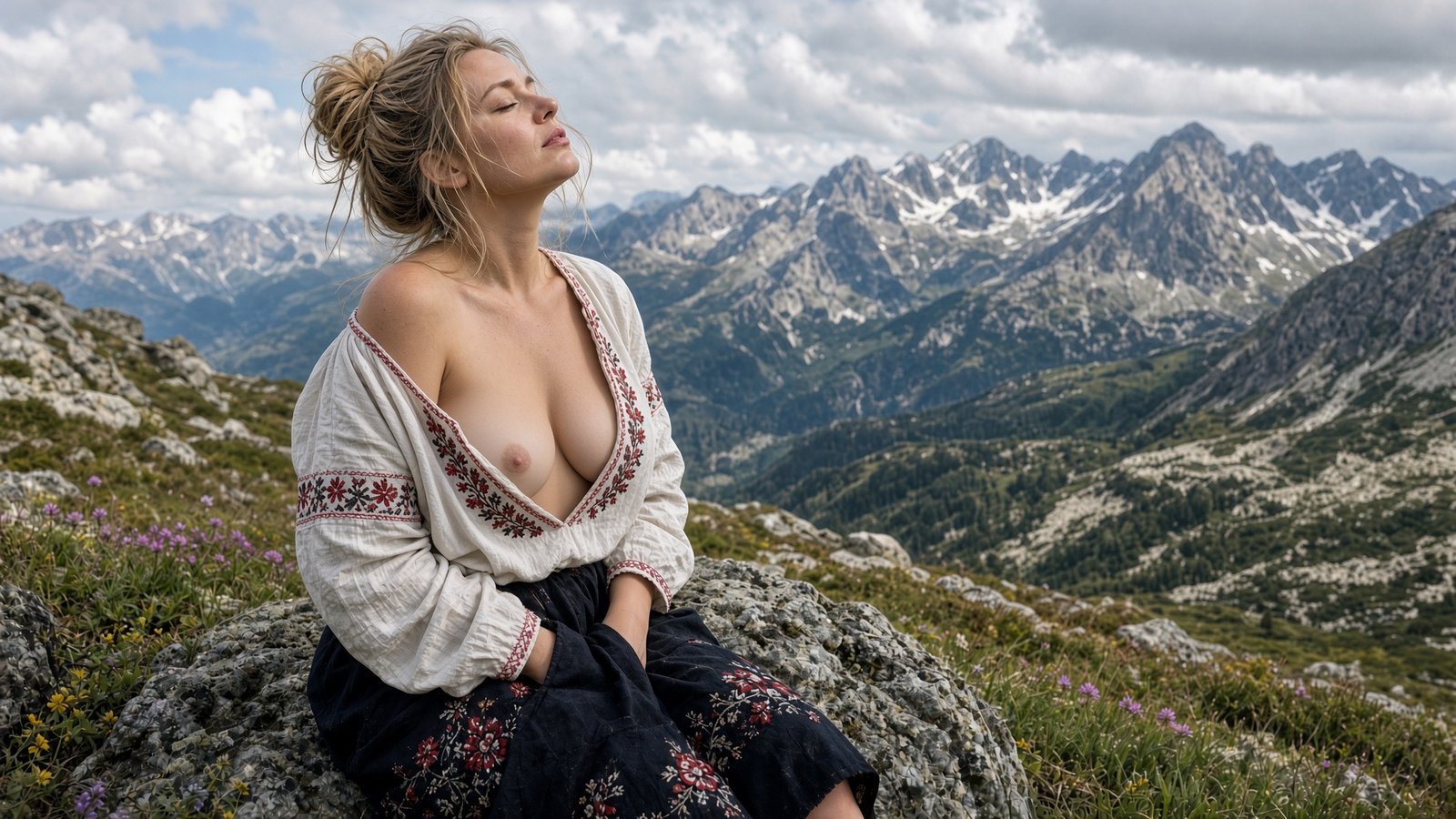
Germany supplies the article’s cleanest lesson in context. Freikörperkultur—free-body culture, usually shortened to FKK—developed through late-19th- and early-20th-century movements concerned with nature, health, exercise, reform and communal life. It contained competing political strands, including some entanglement with nationalism and racial ideology; it was never one innocent, unified movement. A Hannover historical exhibition and scholarship on naturism under National Socialism document that complicated history.
In ordinary contemporary settings—a designated beach, park area or sauna—nudity may be desexualized by etiquette. Staring, photographing or turning the space into a pickup scene violates the social code precisely because nakedness is not the invitation. The distinction is maintained collectively.

Photo: Fino Munich, via Wikimedia Commons. Source · CC BY-SA 4.0 · Image reproduced without visual alteration.
Germany also has a regulated commercial adult industry and media-protection system. The Federal Agency for Child and Youth Protection in the Media describes its mandate as protecting minors while enabling safe participation in digital media (BzKJ). Adult sexual material and ordinary social nudity are treated differently because intention, venue and access differ.
No, not every German is a naturist. The important point is narrower and better: a culture can normalize some public nudity while drawing clear boundaries around pornography. Skin alone does not tell you what room you are in.
Brazil: public sensuality is not a national consent form
Brazil is often flattened into three images: beach, samba, Carnival. The stereotype turns public performance into evidence that an entire population is “naturally sexual.” It also erases race, class, religion, gender, region and the people doing the looking.
Anthropologist Richard Parker’s Bodies, Pleasures, and Passions describes Brazilian sexual culture as multiple systems of meaning, not one temperament. Carnival can invert ordinary rules, stage the body and negotiate national identity. It also exists beside Catholic and evangelical influence, family respectability, feminist politics, queer expression and long histories of racialized representation.
The “mulata” figure demonstrates the danger. Scholarship on samba performance shows how a brown-skinned female body became a national symbol through colonial ideas, tourism, media and state-sponsored imagery. Celebration and commodification occupy the same parade route. A costume seen on television is neither pornography nor permission to project a fantasy onto every Brazilian woman.
Commercial adult media developed through film, magazines, television-adjacent eroticism and, later, webcams and creator platforms. A Brazilian study of erotic-sexual markets on digital platforms treats webcam work as platform labor: performers operate through interfaces, payment systems, rules and precarity. More recent fieldwork follows Brazilian creators across OnlyFans, Privacy and mainstream social media, where visibility depends on platforms that may simultaneously profit from sexualized attention and restrict explicit promotion.
Brazil is not a nation-sized bedroom. It is a case study in how the body becomes culture, labor, tourism, controversy and commerce—often at the same time.
Nigeria: colonial law, local morality and mobile media
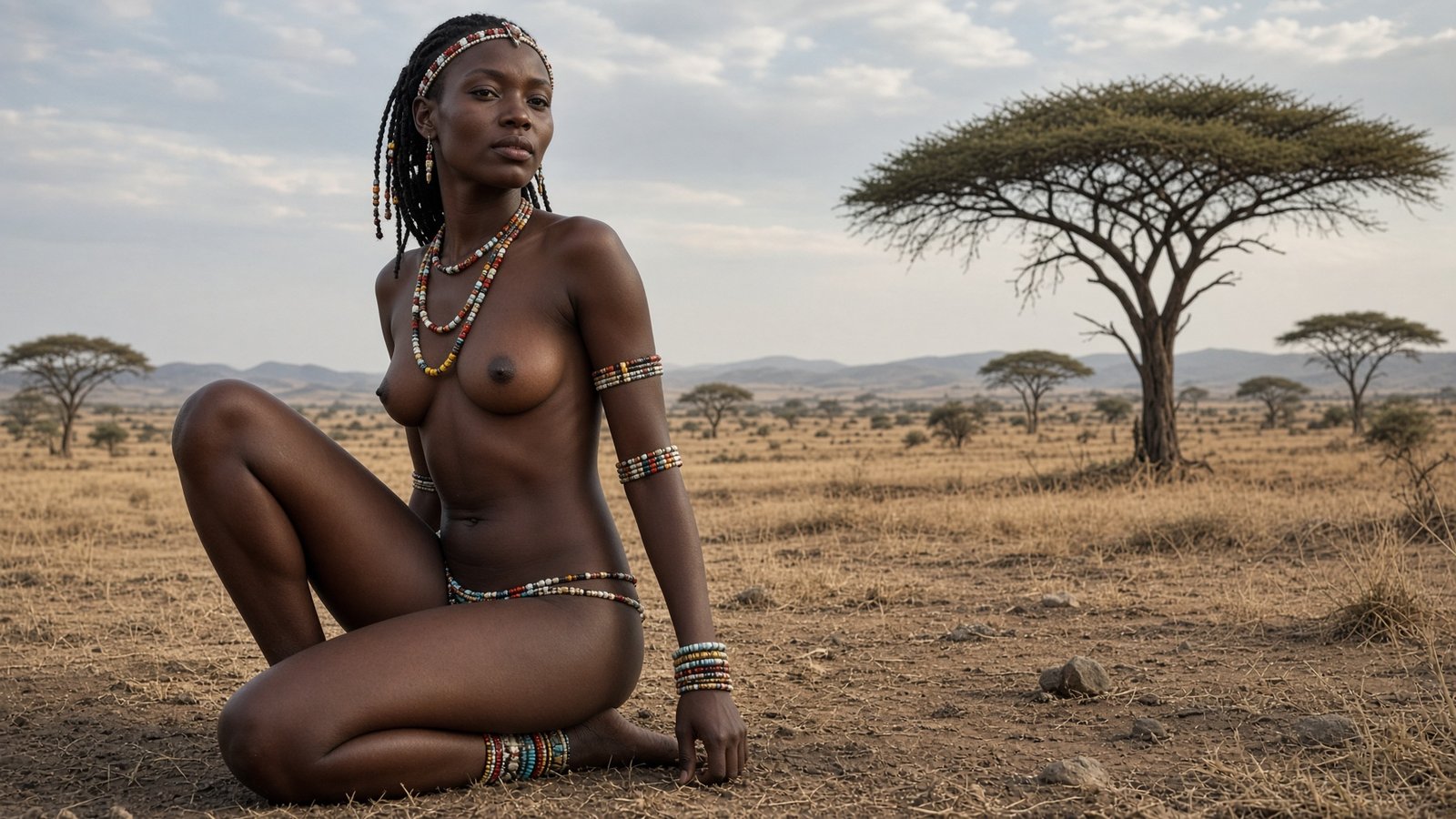
Nigeria cannot stand in for West Africa, let alone the continent. It is useful precisely because its conflicts are specific: British colonial governance, Muslim and Christian institutions, many local moral traditions, a vast film industry, urban youth culture and mobile-first digital life.
Saheed Aderinto’s When Sex Threatened the State shows colonial Nigeria as a site of argument rather than passive moral importation. British authorities, African reformers, nationalists, medical officials and communities disagreed over prostitution, public morality and state power. Colonial regulation did not simply replace a uniformly permissive local past; Nigerians participated in, resisted and redirected it.
Today the National Film and Video Censors Board requires films and video works to be classified before distribution or exhibition and describes its task as balancing expression with law (NFVCB). That formal system sits beside social media, private messaging, imported streaming and creator culture, where borders are much harder to patrol.
Nollywood is not an adult-film industry, but it matters to the story of desire. Popular film can stage adultery, marriage, temptation, spiritual danger and gender conflict without crossing into explicit display. Sexual storytelling often appears through consequence and melodrama rather than anatomical visibility. A society can talk loudly about sex while showing little of it.
The lesson is not that Nigeria is conservative. It is that public sexual representation is negotiated among law, religion, family, local aesthetics, global platforms and a creative industry skilled at implication.
South Africa: from apartheid censorship to constitutional argument
Under apartheid, censorship was not a discrete campaign against dirty books. It belonged to a larger state machinery that classified bodies, politics and ideas. Research from the University of Cape Town describes pornography as a banned medium entangled with the policing of marginalized bodies; censorship boards also suppressed political, gay and feminist material (UCT archive study).
Democratic transition changed the frame. The 1996 Constitution protected expression and privacy, while the Films and Publications Act created a classification system rather than preserving a blanket adult-media ban. The current Film and Publication Board assigns ratings, restricts child sexual abuse material and provides for X18 distribution through licensed adult premises under specified conditions (South African government; FPB classification).
That is not a clean passage from repression to freedom. Regulation continues, online distribution complicates jurisdiction, and sexual media remains contested through gender violence, religion, LGBTQ+ rights and child protection. Yet the institutional change matters: adult citizens’ rights entered the legal conversation in a way the apartheid state had deliberately denied.
South Africa also demonstrates why “African attitudes” is a useless phrase. Its constitutional order, media market and censorship history differ from Nigeria’s. Both differ again from Ghana, Kenya, Senegal or Egypt. A continent is not a survey answer.
Before colonialism: fertility is not a euphemism for porn
Museum galleries have often encouraged a familiar mistake: see breasts, belly or genitals; assume sex; label the object “fertility”; move on. That habit collapses complex lives into reproductive symbolism and repeats the colonial gaze that treated African bodies as exotic evidence.
Consider the Akan akua’ba figures of Ghana. The Met explains that these stylized female figures could be consecrated, carried by women seeking to conceive, returned to shrines, kept as memorials or valued as family objects. Features such as the high forehead, neck rings and body shape express specific ideals of beauty, health and prosperity (Met: Akua’ba figure). They concern reproduction, kinship, aesthetics and spiritual practice. That does not make them erotic commodities.
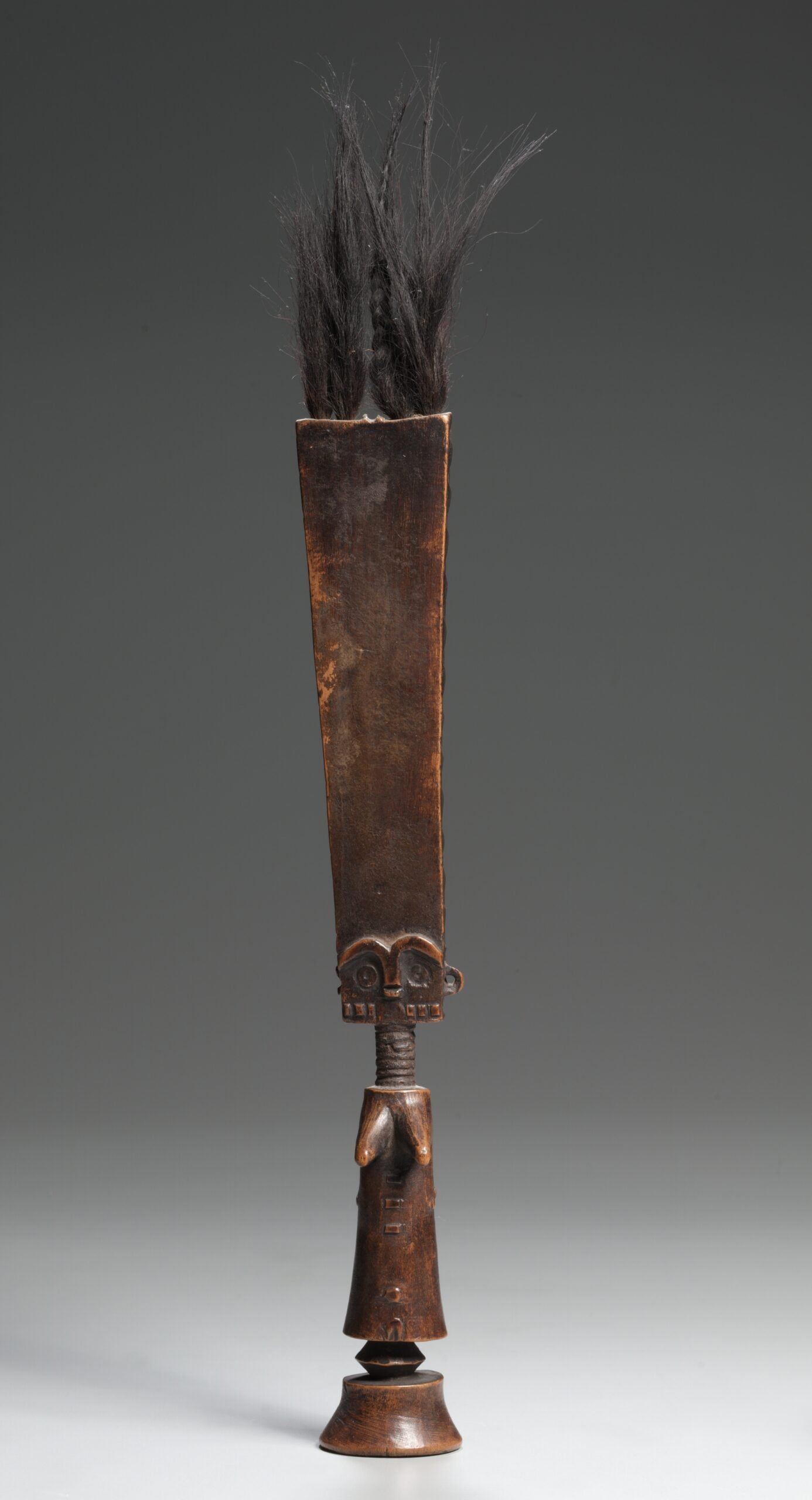
Credit: Cleveland Museum of Art, Gift of Katherine C. White (1975.158). Source · CC0 · Image reproduced without visual alteration.
Or consider the Baga d’mba figure from Guinea, an embodiment of mature womanhood, maternal power, beauty and social continuity used in performance and shrine contexts (Met: D’mba). A prominent body can signify strength and collective protection without operating as pornography.
European collectors and museums frequently detached such objects from performance, ownership and ritual, then reclassified them through categories such as “primitive,” “fetish,” “obscene” or “fertility idol.” Modern museums are revising records and provenance, but the old labels still haunt search results.
The responsible move is not to romanticize a sexually liberated precolonial Africa. It is to name the people, object, evidence and uncertainty—and to stop making nudity do interpretive work it cannot do alone.
The Moche: explicit ceramics, uncertain audiences
Ancient Moche artists on Peru’s north coast made ceramic vessels depicting rulers, warriors, animals, death, bodily difference and sexual acts. Some are startlingly explicit to modern eyes. That visual fact is secure. Their social meaning is not.
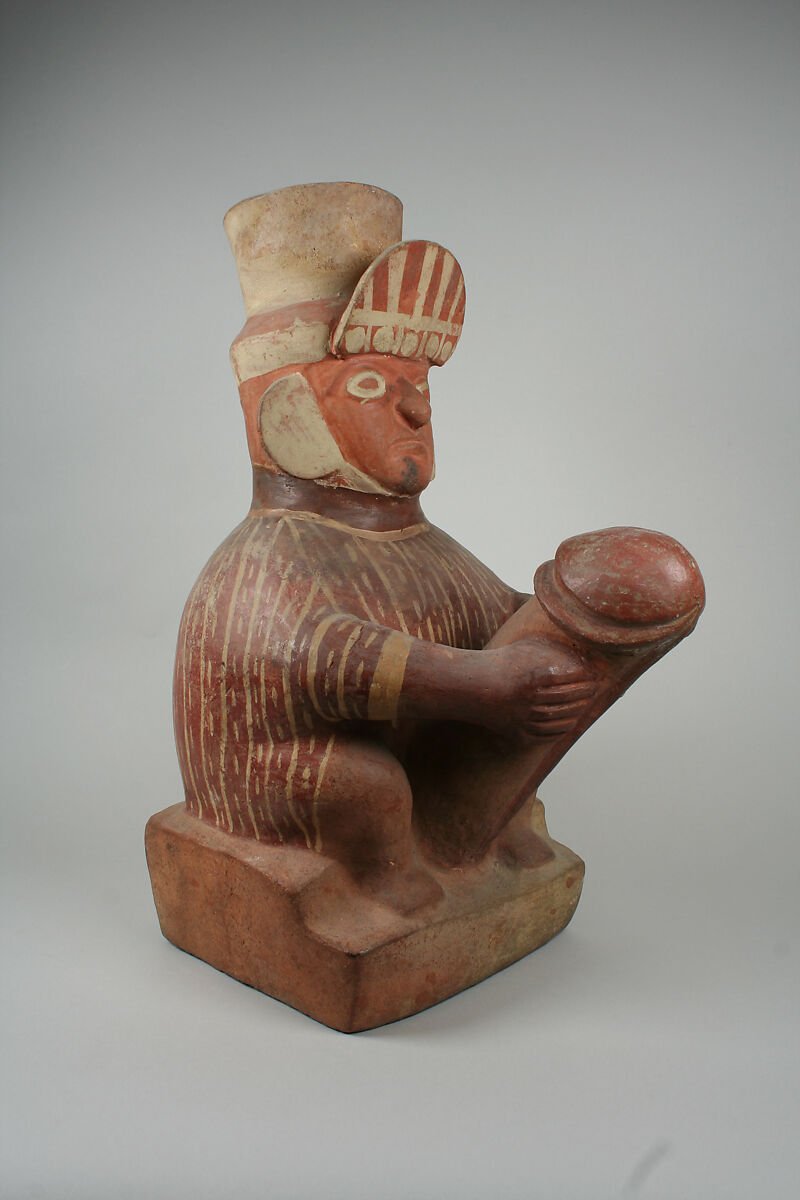
Credit: The Metropolitan Museum of Art, Gift of Nathan Cummings, 1965 (65.266.76). Source · Public domain · Image reproduced without visual alteration.
The Met notes that Moche decorated ceramics appeared in burials, elite ritual and domestic compounds; some vessels show wear from use among the living. Scholars continue to debate how images functioned across funerary practice, cosmology, teaching, status and household ritual (Met overview of Moche ceramics). Museo Larco’s erotic gallery connects some sexual scenes to life-death complementarity and funerary offerings while acknowledging interpretive limits (Museo Larco introduction).
An explicit vessel is not automatically ancient commercial pornography. We do not have a ticket booth, a subscription price or a diary explaining the viewer’s private response. We have archaeological context, repeated imagery and scholarly argument.
Colonial Christianity later altered how Indigenous bodies and sexual representation were categorized, displayed and suppressed across the Americas. Modern museum labels can either repeat that judgment or expose it. The pot remains explicit. The certainty belongs to us, not necessarily to the people who made it.
Arabic and Persian traditions: eroticism before the stereotype of silence
The phrase “the Middle East bans porn” collapses literature, empire, religion and more than 20 contemporary states into one badly packed suitcase.
Medieval Arabic literature included love poetry, medical discussion, bawdy anecdotes, sexual manuals and urban storytelling. The Cambridge World History of Sexualities surveys scholarship on sexuality in 9th- and 10th-century Baghdad; another Cambridge history identifies works by al-Tifashi, al-Nafzawi, al-Suyuti and others within a flourishing erotic literature. These texts were shaped by class, gender, medicine, court life and religious thought. They do not prove universal tolerance. They do disprove cultural amnesia.
Persian visual and poetic traditions add another register. Safavid albums joined calligraphy, love poetry and intimate imagery; the Met’s study of Persian drawings notes rare reclining nudes influenced partly by contact with European art. A 1589–90 manuscript page at the Walters Art Museum shows men exchanging love poetry in a garden, reminding us that erotic feeling need not arrive as anatomical display.
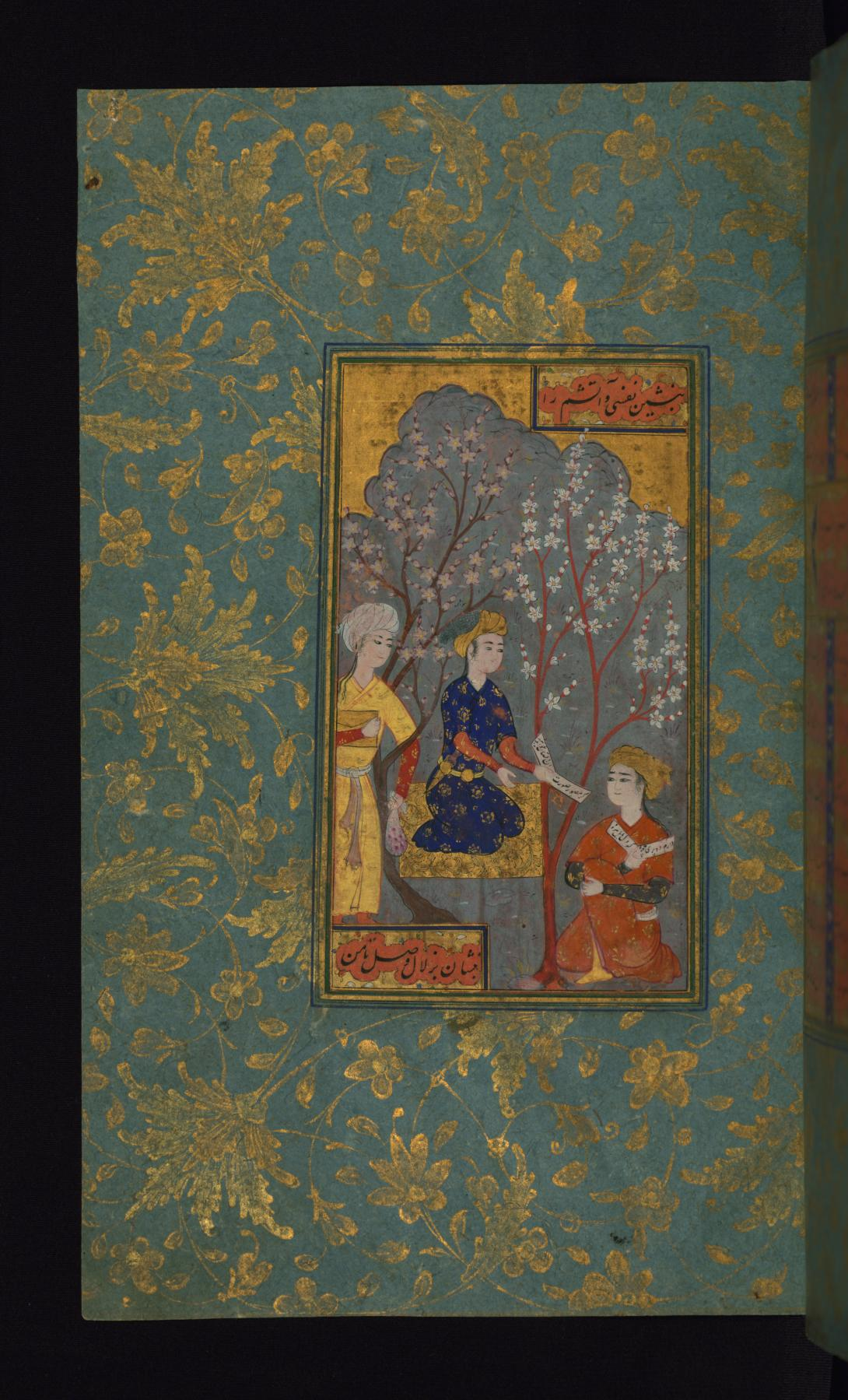
Credit: The Walters Art Museum, Acquired by Henry Walters (W.651.3A). Source · CC0 · Image reproduced without visual alteration.
Modern legal regimes vary. The United Arab Emirates’ 2023 media framework lists pornography and nudity among prohibited media content, according to the official UAE government portal. Saudi Arabia’s Anti-Cyber Crime Law penalizes the preparation, publication or promotion of pornographic material through information networks (official law text). Other Arab and Muslim-majority jurisdictions have different statutes, enforcement and cultural markets.
Historical erotic literature and modern restriction can inhabit the same cultural lineage without canceling each other. The contradiction is the story.
What one culture calls erotic, another calls obscene
| Case study | Historical tradition | Modern media environment | Central tension |
|---|---|---|---|
| Japan | Shunga prints and erotic books | Large adult-video, manga and animation markets under obscenity regulation | Explicit fantasy versus regulated depiction |
| India | Kama literature, auspicious couples and temple sculpture | Large digital audience under obscenity and intermediary rules | Celebrated heritage versus modern public restriction |
| China | Bedchamber texts, erotic fiction and painting | Strict state controls; private and coded digital circulation | Historical plurality versus modern legal prohibition |
| South Korea | Literary and visual traditions; modern serialized romance | Webtoons and hyperconnected media beside adult-site blocking | Digital creativity versus restrictive distribution and abuse concerns |
| France | Libertine literature, photography and erotic cinema | Art institutions, X classification and age controls | Cultural prestige versus commercial pornography |
| United States | Print, stag films and adult cinema | Global platforms, creator subscriptions and state age-verification laws | Speech and scale versus obscenity, safety and privacy |
| Germany | Naturism and body-reform movements | Regulated adult media plus nonsexual social nudity | Nudity versus pornography |
| Brazil | Carnival performance, film and media body culture | Local creator and webcam platforms | Public sensuality versus racialized commodification |
| Nigeria | Diverse local moral traditions and colonial regulation | Film classification, mobile media and implicit sexual storytelling | Religion, colonial law and global platforms |
| South Africa | Colonial and apartheid censorship | Constitutional rights plus classification | State repression versus democratic regulation |
This is not a scorecard. Every row contains regional, class, generational and political differences. “Modern media environment” is a moving target, and the legal descriptions above were checked on October 8, 2026.
Nudity is not pornography
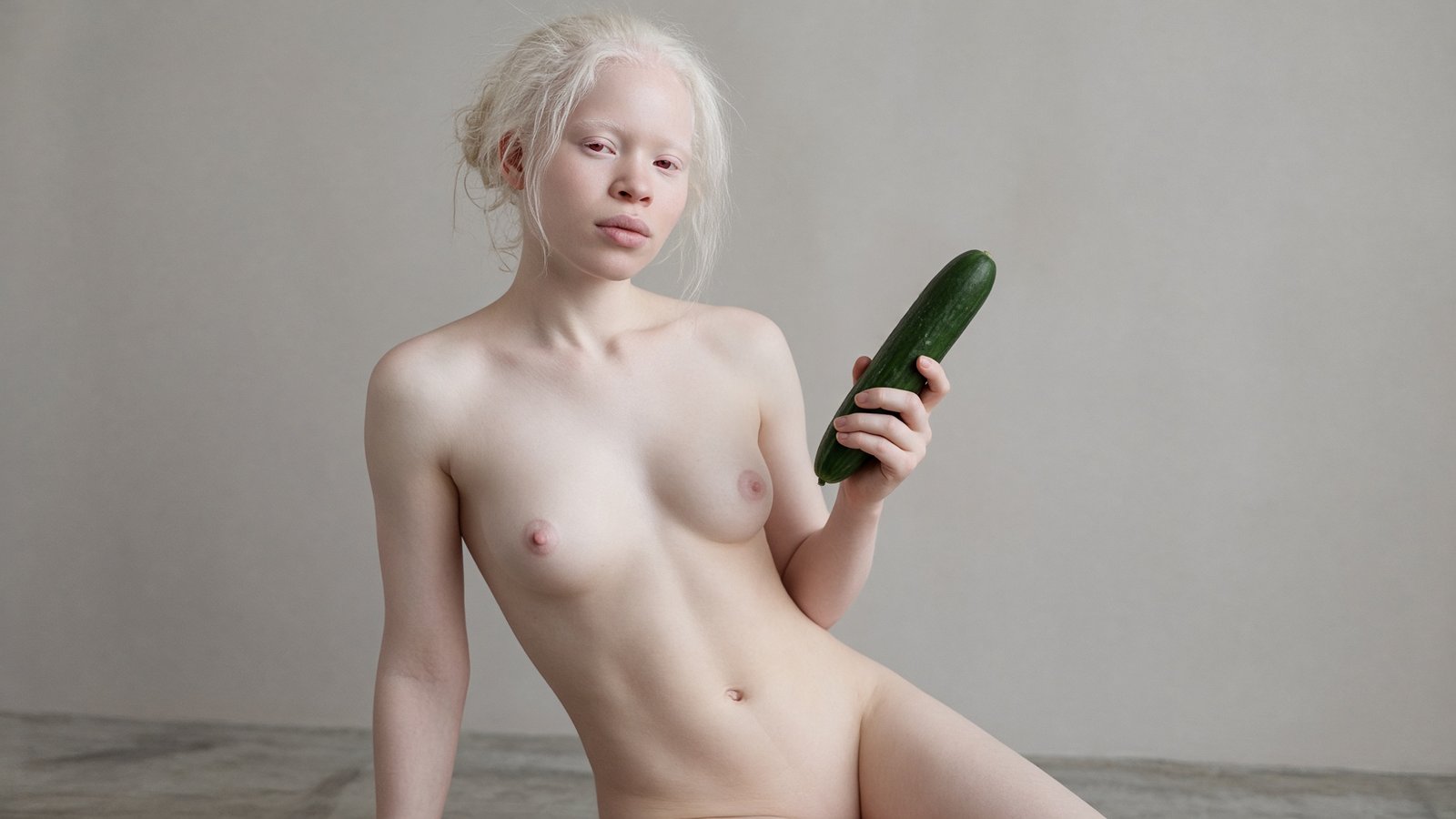
A body does not become pornographic by losing its clothes. It becomes meaningful through context.
The nude bather at an FKK beach is participating in a social environment that attempts to remove sexual spectacle from ordinary nakedness. The classical nude in a museum may be studied as form, mythology, power or beauty. The unclothed patient in a medical image is documented. A Carnival costume stages performance. An adult performer addresses an audience within a commercial sexual work.
Those contexts can still contain power and discomfort. Museums have objectified bodies. Naturist spaces can be photographed without consent. Medical images can be abused. Performance can be sexualized by viewers. Context does not magically make harm impossible; it gives us a more precise way to identify it.
The habit of equating nudity with sexual permission is especially dangerous across cultures. It turns dress, dance or public bathing into a consent claim. No cultural costume, bare breast, beach norm or artistic pose grants permission to touch, record, distribute or synthesize a person’s image.
Religion and law: neither speaks with one voice
Christian, Muslim, Hindu and Buddhist institutions have all shaped sexual representation. None produces one uniform outcome.
Christian missions sometimes imposed clothing, marital and obscenity norms through colonial education and government. Yet Christian Europe also produced nude religious art, bawdy literature and commercial pornography. Islamic jurisprudence often regulates modesty and sexual conduct, while medieval Arabic and Persian writers produced frank medical, marital and literary texts. Hindu traditions include ascetic and erotic currents, temple cultures and modern political conservatism. Buddhist contexts range from monastic discipline to commercial sexual media in majority-Buddhist societies.
Secular states are not neutral machines. France classifies film and protects minors; the United States litigates speech and community standards; China regulates sexual media through criminal and administrative law; South Korea combines democratic institutions with extensive content control. Communism, nationalism, liberalism and public-health policy can censor as efficiently as theology.
The relevant questions are concrete: Which institution? Which period? Which medium? Which audience? Which conduct—production, possession, distribution, access or sale? “Religion bans sex” is not analysis. Neither is “secularism liberated it.”
Colonialism changed the sexual rulebook
Colonial power did more than prohibit images. It changed who could define obscenity.
British legal codes traveled through India, Nigeria and other colonies. Missionaries and administrators altered clothing norms, schooling, marriage regulation and the public treatment of bodies. Museums removed ritual and domestic objects from communities, displayed them as ethnographic specimens and filtered them through European anxieties about race and sexuality. Colonial regimes could condemn local practices while sexualizing colonized people in travel writing, photography and collecting.
The effects survived independence. Statutory language, censorship institutions and moral categories often remained because postcolonial states inherited administrative systems and developed their own political uses for them. But local actors were never merely passive. Religious leaders, feminists, nationalists, artists and audiences argued over the same laws, sometimes demanding stricter controls and sometimes using courts and publishing to resist them.
Nor should precolonial life be romanticized as a sensual paradise before Europeans arrived. Societies had their own hierarchies, taboos, gender rules and punishments. Colonialism did not invent sexual regulation. It redistributed authority, racialized it and often froze flexible practices into bureaucratic categories.
Porn went global—and started looking the same
The early internet seemed like infinite sexual plurality. In practice, scale rewarded standardization.
Global platforms needed searchable tags, thumbnails, short titles, familiar camera grammar, predictable file lengths and categories legible across languages. English labels traveled widely. Studio aesthetics influenced amateur creators; amateur aesthetics were absorbed back into studios. Recommendation systems favored content that generated measurable clicks and watch time. The homepage became a customs checkpoint run by engagement metrics.
This did democratize production in important ways. Queer creators, independent performers, niche filmmakers and people outside established studio centers could reach audiences. Direct subscriptions could make a small loyal following more valuable than mass distribution. Cheap cameras and mobile networks widened participation.
But access did not erase hierarchy. A 2025 study of 45 creators in France, Belgium and Switzerland describes subscription labor as the continuous commercialization of an intimate self, not a single upload (Beyond the Gig). Research on online sex work finds that creators must navigate mainstream social networks, moderation and payment systems that can abruptly change the conditions of work. The performer may own the camera and still rent the audience.
Global adult media therefore became simultaneously more diverse in producers and more uniform in interface. The catalogue expanded. The shelf labels narrowed.
Algorithms do not merely reflect desire; they arrange it
A recommendation engine cannot reach into a person and manufacture a sexuality from scratch. It can decide what appears next.
Search autocomplete suggests language. Categories establish which identities are treated as normal and which become tags. Trending pages convert attention into social proof. Thumbnails reward visual conventions. A recommendation chain can make one fantasy feel abundant and another nearly invisible.
An academic analysis of Pornhub found that platform design and suggestions can reiterate heteronormative assumptions about users, gender and desire (Bainotti, Semenzin and Gandini, Porn Studies). Research on webcam platforms documented thousands of categories and the “hypercategorization” of performers, with race, gender, body type and nationality turned into commercial filters (Stegeman and colleagues).
That does not mean a tag causes a preference. It means taxonomies make some ways of seeing easier to find, repeat and monetize. The platform is not a neutral mirror. It is a mirror with shelves, spotlights and a cashier.
The people on screen are workers, artists and rights-holders
Cultural analysis becomes bloodless when performers appear only as symbols.
Adult media is made by people: performers, directors, writers, photographers, editors, translators, moderators, cam workers, illustrators and independent creators. Their conditions vary radically. Some value autonomy, creative expression and direct audience relationships. Others experience coercion, unsafe sets, piracy, racism, nonpayment, platform bans or pressure to maintain a marketable persona around the clock. Many experience several truths at once.
Feminist pornography, queer production and ethical-studio movements have challenged whose pleasure is centered, how consent appears on screen and who controls distribution. Independent platforms can reduce a studio gatekeeper while adding a software gatekeeper. Research on payment intermediaries shows that rules made far from a set can structure adult creators’ livelihoods. A card network or app store may become a moral regulator without ever calling itself one.
Representation also affects work. Racial categories can funnel performers toward stereotypes. National labels can turn accent and costume into fetish inventory. Queer work may be simultaneously marketed as niche and censored as risky. The cultural question—what may sex look like?—is also a labor question: who gets hired, tagged, paid, promoted, copied and removed?
AI may re-localize fantasy
The global tube site asks users to search a fixed library. Generative AI offers a different proposition: describe the scene.
That could make adult media more culturally specific. A fictional companion might speak Brazilian Portuguese or Yoruba, remember a local festival, set a story in a recognizable apartment rather than a generic luxury bedroom, use regionally meaningful humor, or draw from local fashion and mythology. Writers could build serialized erotic fiction for audiences ignored by large studios. Small creators could produce alternate visual styles without copying the same global set.
This is a technological possibility, not evidence that present systems are culturally fluent. Language support is uneven. Training data overrepresents some countries and aesthetics. Models can combine recognizable details while missing the social rules that give those details meaning. A sari, kimono, headwrap or religious symbol is not “cultural authenticity” simply because software rendered it cleanly.
UNESCO’s work on AI and culture calls for discoverability of diverse local content and participation by cultural industries, while warning that the technology can concentrate power and erase underrepresented knowledge (UNESCO independent expert report). In adult media, the stakes include intimacy, race and consent. Localization deserves more than a language dropdown.
See how adult media is changing now
For the current commercial landscape, compare EverLusty’s Best NSFW AI Sites & Tools, Best Adult AI Companion Apps, Best NSFW AI Chatbots and Best AI Porn Video Generators. For the longer technological arc, read From Ancient Desire to AI Lovers and The AI Porn Gold Rush.
AI can also automate stereotypes
Personalization is not cultural sensitivity with better lighting.
Text-to-image systems learn from archives already shaped by colonial photography, advertising, pornography, beauty standards and unequal visibility. A peer-reviewed study of Stable Diffusion models found racial and gender biases in generated nudity and sexual content (Scientific Reports, 2025). An ACL study found that Stable Diffusion could sexualize women of color and reproduce Western fetishization (Naik and Nushi, 2023). Other work finds stereotyped or dehumanizing representations of non-cisgender identities.
Adult generation intensifies those risks because stereotype can be sold as preference. Nationality becomes an outfit. Race becomes a body preset. Religious clothing becomes fetish shorthand. Skin tone is lightened. An accent is exaggerated. A culture is reduced to the few images most heavily represented in the training set.
The correction is not to ban culturally specific fantasy. It is to ask who authored it, what data shaped it, whether it targets real people, whether the character is unmistakably adult, and whether the result reproduces a degrading script under the label of customization. Culturally grounded creators should have power over how their work and communities enter the pipeline.
Censorship in the AI era comes in layers
An AI adult image may pass through more gates than a film reel ever did:
1. The model may reject the prompt.
2. The service may block an account or a country.
3. An app store may prohibit pornographic apps; Apple’s current guidelines say services used primarily for pornographic content do not belong in the App Store.
4. A payment provider may refuse adult transactions.
5. A hosting or social platform may remove promotion.
6. Local law may restrict creation, possession, distribution or access.
7. Age-assurance systems may require proof of adulthood.
8. Consent and likeness laws may protect an identifiable person regardless of whether the file is synthetic.
These layers can protect people, suppress lawful expression, or do both imperfectly. They also create a geography of product availability that is not visible in a model demo.
Non-consensual intimate imagery is the clearest line. In the United States, the TAKE IT DOWN Act covers qualifying authentic and AI-generated intimate depictions; since May 19, 2026, covered platforms must provide a removal process and act on valid requests within statutory timeframes (FTC guidance). South Korea has strengthened synthetic sexual-abuse law. The European Union adopted new 2026 rules addressing AI systems intended to generate or manipulate non-consensual intimate material. These regimes differ, but none supports the fantasy that “AI-generated” means victimless when a real identity is used without permission.
The user’s practical rule is simpler than the international legal chart: do not use another person’s face, voice or intimate material without informed authorization; do not sexualize minors or age-ambiguous characters; and do not treat a model’s willingness to generate as proof that creation or distribution is lawful.
Myths that should not survive the trip
| Claim | Verdict | Why it misleads | Better framing |
|---|---|---|---|
| “Japan is sexually permissive because hentai exists.” | Too simple | It ignores obscenity law, mosaics, self-regulation and the difference between fiction and live performance. | Japan has an expansive commercial fantasy culture operating beside formal depiction limits. |
| “India used to be sexually liberated.” | Too simple | It turns selected texts and temples into evidence about an entire population and erases hierarchy and debate. | Premodern Indian traditions included important erotic forms whose meanings differed from modern pornography. |
| “Europe is relaxed about porn.” | False as a generalization | France, Germany and the UK have different histories, age rules, classifications and nudity norms. | Compare institutions and media, not a continent-sized personality. |
| “Africa is sexually conservative.” | Meaningless | Africa contains thousands of cultures and multiple colonial, religious and legal histories. | Name the country, community, era and medium. |
| “Muslim societies have no erotic literary tradition.” | Historically false | Medieval Arabic and Persian literature contains love poetry, sexual manuals, medical writing and bawdy narrative. | Historical erotic traditions can coexist with restrictive modern jurisdictions. |
| “Latin cultures are naturally more sexual.” | Racialized stereotype | It confuses performance and media imagery with private behavior or consent. | Brazil’s body culture is produced through history, religion, race, tourism and commerce. |
| “Public nudity means greater sexual freedom.” | Not necessarily | Naturist contexts may deliberately desexualize nudity. | Ask what the setting and social rules make the body mean. |
| “AI makes fantasy culturally authentic.” | Unproven | Models can localize language and setting while reproducing training-data stereotypes. | AI can support local creation only when people, data and context are handled responsibly. |
A dated legal snapshot—not a travel guide
| Jurisdiction | What was verified | What this does not mean |
|---|---|---|
| Japan | Penal Code Article 175 continues to regulate obscene distribution and public display. | That all sexual media is prohibited or that every mosaic is ordered directly by the state. |
| India | IT Act provisions and 2021 intermediary rules address obscene, sexually explicit and non-consensual content online. | That every nude artwork or adult-certified film is illegal. |
| China | Criminal law penalizes commercial production and serious dissemination of pornographic material, including online forms. | That historical erotic art disappeared or private culture is reducible to statutes. |
| South Korea | Youth-media rules, obscenity controls and strengthened deepfake-sexual-abuse law operate alongside rated digital storytelling. | That Korea and Japan share the same regime. |
| France | Film classification and Arcom age-protection powers distinguish adult access from general circulation. | That literary or museum erotica is treated identically to a porn site. |
| United States | Obscenity doctrine remains governed by Miller; Paxton upheld the challenged Texas age-verification rule in 2025. | That one national porn law governs every state and platform. |
| United Kingdom | Ofcom requires highly effective age assurance for services allowing pornography under the Online Safety Act framework. | That age checks settle every privacy or enforcement question. |
| South Africa | The FPB classifies media; X18 material may be distributed through licensed adult premises under specified rules. | That constitutional protection removes all content restrictions. |
Check date: October 8, 2026. Enforcement and court decisions can differ from statutory text. Reverify before relying on any entry.
Final verdict: desire is universal; its categories are not
Human beings have represented bodies, pleasure, courtship, fertility, danger and fantasy across enormous spans of time. That does not make pornography an eternal box into which every explicit object can be dropped.
Shunga belonged to a print culture. A mithuna couple belonged to a temple surface. Moche ceramics moved through homes, rituals and graves. Arabic and Persian erotic texts belonged to medical, literary and courtly worlds. French forbidden books became national-library treasures. American adult film became industrial media. German naturism made some nudity socially ordinary. South African democracy rewrote a censorship system built for apartheid.
Then the internet placed much of this complexity behind one search bar.
It expanded access and gave independent creators new routes to audiences. It also standardized the thumbnail, the category, the camera and the economics. Algorithms did not discover a neutral global desire; they organized attention through labels built from commercial and cultural histories.
AI may open the catalogue again. It can generate local languages, regional settings, unfamiliar story structures and personalized fictional worlds. It can also repeat the oldest colonial trick in newer pixels: reduce a person or culture to a sexual type and call the result desire.
So the same image can be art in one room, sacred in another and obscene in a third because images do not govern themselves. Institutions, audiences, histories and power do that. The world does not agree on what sex is allowed to look like. It never has.
The next boundary will not be drawn by culture alone. It will be negotiated among creators, regulators, payment systems, model builders and the people whose bodies—real or synthetic—appear on the screen. The technology is new. The argument over who gets to define desire is ancient.
Keep exploring: read EverLusty’s history of porn from ancient art to AI lovers, or browse more research-backed adult-culture articles.
Frequently asked questions
Is erotic art the same as pornography?
No. There is no universal boundary. Purpose, setting, audience, distribution, explicitness and the institutions judging the work all matter.
Why is explicit adult media commonly censored in Japan?
Japan’s Penal Code Article 175 regulates obscene distribution and public display, while industry self-regulation and enforcement practice also shape the mosaics used in commercial adult video.
Are the erotic carvings at Khajuraho ancient pornography?
That label is too narrow. The carvings are part of a much larger temple program, and scholars connect them to several possible religious, auspicious, social and aesthetic meanings.
Does public nudity mean a culture is more sexually permissive?
Not necessarily. Naturist settings may deliberately desexualize nudity, while a society can treat ordinary nudity and commercial pornography very differently.
How do algorithms shape sexual media?
Search labels, categories, thumbnails and recommendation systems make some fantasies easier to find and monetize than others. They arrange attention even when they do not create a person’s preferences from scratch.
Can AI make adult fantasy more culturally authentic?
It can localize language, settings and storytelling, but authenticity is not automatic. Training-data bias can reproduce fetishization, colorism and costume clichés.
What consent rules matter for AI sexual content?
Use unmistakably adult fictional characters or properly authorized likenesses. Do not use another person’s face, voice or intimate material without informed permission, and never sexualize minors or age-ambiguous characters.
Are pornography laws the same around the world?
No. Definitions, age rules, classification systems, platform duties and enforcement differ by jurisdiction and change over time. The legal table in this article is a dated cultural snapshot, not legal advice.
Historical, legal and regulatory sources checked October 8, 2026.